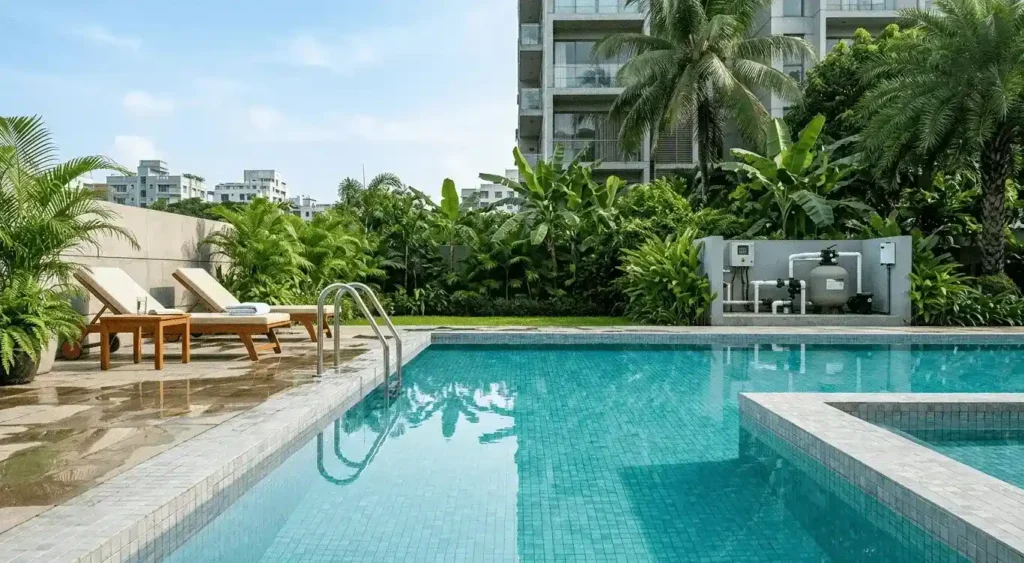
A swimming pool needs more than regular cleaning to keep its water clear, balanced, and suitable for swimming. Proper swimming pool water treatment helps manage dirt, suspended particles, algae, microorganisms, and other water-quality issues while also supporting the proper operation of pumps, filters, pipelines, and other pool equipment.
In Bangladesh, swimming pools are found in residential properties, hotels, resorts, clubs, gyms, schools, sports facilities, and commercial properties. Pool water quality can change depending on usage, weather, water source, and maintenance practices, making a suitable treatment system important for ongoing pool care.
This guide explains how swimming pool water treatment works, the main treatment methods, common pool water problems, treatment plant installation, maintenance requirements, pricing factors, and how to choose a suitable swimming pool provider in Bangladesh.
What Is Swimming Pool Water Treatment?
Swimming pool water treatment is the process of circulating, filtering, disinfecting, and chemically balancing pool water to maintain suitable water quality.
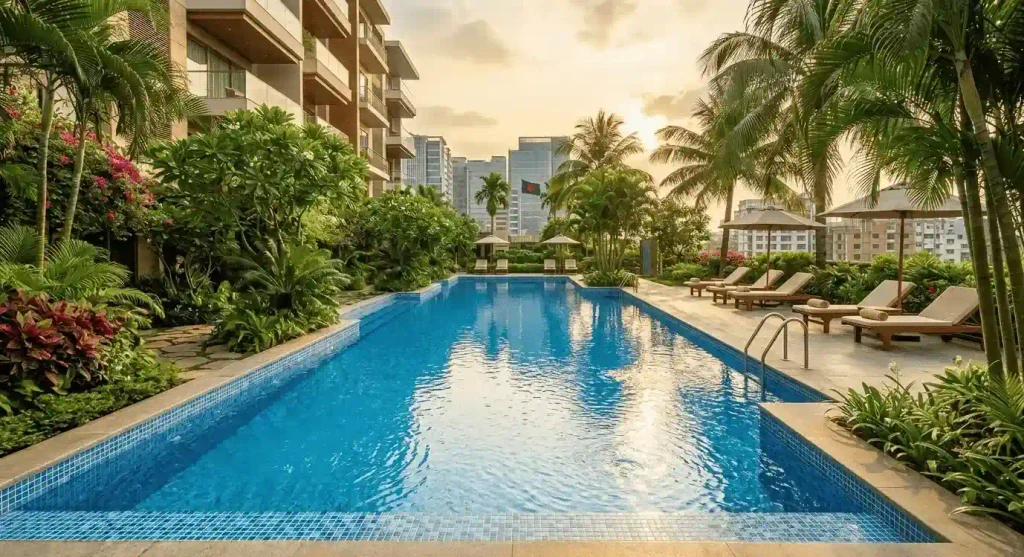
A swimming pool treatment system can include different components depending on the pool size, water condition, usage level, and treatment requirements. Common components include:
- Pool circulation and pumping systems
- Sand, cartridge, or DE filtration
- UV disinfection
- Chemical dosing systems
- Chlorine and pH management
- Backwashing and filter maintenance
- Pool water testing and monitoring
- Pool cleaning and maintenance equipment
The exact system configuration depends on the individual pool. A private residential pool and a high-use commercial pool may require different treatment capacities and equipment.
Why Is Swimming Pool Water Treatment Important in Bangladesh?
Pool water can become cloudy, develop algae, produce an unpleasant odor, or accumulate dirt and mineral deposits when circulation, filtration, disinfection, and chemical balance are not properly managed.
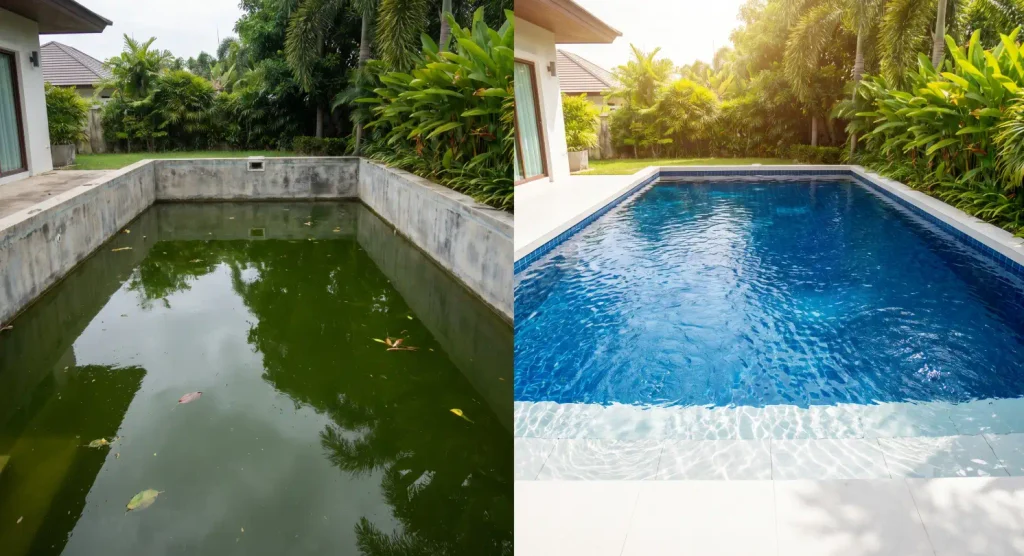
Some common pool water problems include:
Green Pool Water
Algae growth can turn pool water green and affect its appearance. Proper circulation, filtration, and disinfection help control algae and maintain clearer water.
Cloudy Pool Water
Dust, suspended particles, inadequate filtration, and water-quality issues can make pool water cloudy. An appropriate filtration system helps remove suspended particles from the water.
Unpleasant Pool Odor
Unusual pool odor can be associated with water-quality or chemical-balance issues. Regular testing and appropriate chemical management can help maintain better water conditions.
Skin or Eye Discomfort
Incorrect chemical balance can contribute to skin or eye discomfort. Monitoring chlorine and pH levels is an important part of swimming pool water management.
Scaling and Mineral Deposits
Minerals in water can accumulate on pool walls, tiles, pipes, filters, and other equipment. Regular water-quality management and maintenance can help reduce these issues.
Pump and Filter Problems
Dirt, debris, scaling, and inadequate maintenance can affect pumps, filters, and pipelines. Regular inspection and cleaning help maintain the treatment system and its components.
How Does a Swimming Pool Treatment System Work?
A swimming pool treatment system generally works through several connected stages. The exact configuration depends on the pool and its treatment requirements.
1. Water Circulation
The circulation system moves pool water through the treatment equipment and returns treated water to the pool.
Proper circulation allows water to pass through the filtration and disinfection stages and helps distribute treated water throughout the pool.
2. Filtration
Filtration removes dirt, debris, suspended particles, and other impurities from pool water.
Common filtration options include:
- Sand filters
- Cartridge filters
- DE filters
WaterMan’s swimming pool treatment solution lists sand, cartridge, and DE filtration among its available filtration methods.
3. Chemical Dosing
Chemical dosing helps manage chlorine and pH levels in swimming pool water.
The required chemical treatment depends on factors such as pool size, water condition, usage, and the selected treatment system. Regular monitoring is important because chemical requirements can change with pool usage and water conditions.
4. UV Disinfection
UV-C disinfection can be used as part of a swimming pool treatment system to help reduce microorganisms such as bacteria, viruses, and algae.
UV treatment can complement chemical disinfection, depending on the system design and treatment requirements. WaterMan lists UV disinfection as one of the features of its swimming pool treatment plant solutions.
5. Backwashing and Filter Maintenance
Filters require regular maintenance to continue operating effectively. Depending on the filtration system, maintenance may include backwashing, cleaning, inspection, and replacement of components when necessary.
WaterMan also lists automated backwash and cleaning cycles among the features of its swimming pool treatment solutions.
Swimming Pool Treatment Methods Compared
Different treatment methods serve different purposes, and several methods may be combined in a single treatment system.
| Treatment Method | Main Purpose |
| Sand Filtration | Removes dirt, debris, and suspended particles |
| Cartridge Filtration | Filters fine particles from pool water |
| DE Filtration | Provides fine filtration for suitable pool applications |
| Chemical Dosing | Helps manage chlorine and pH levels |
| UV Disinfection | Helps reduce microorganisms through UV-C treatment |
| Circulation System | Moves water through the treatment system |
| Backwashing | Cleans suitable filtration media and supports filter performance |
The appropriate combination should be selected based on the pool’s size, usage, water condition, and operating requirements.
Common Swimming Pool Water Problems and Their Causes
Identifying the symptoms can help determine what type of treatment or maintenance may be required.
| Pool Water Problem | Possible Causes |
| Green water | Algae growth, inadequate treatment, poor circulation |
| Cloudy water | Suspended particles, filtration problems, water imbalance |
| Unpleasant odor | Water-quality or chemical-balance issues |
| Tile or wall stains | Mineral deposits, water-quality issues, inadequate cleaning |
| Frequent filter blockage | Dirt, debris, scaling, or insufficient maintenance |
| Pump or pipeline blockage | Debris, scaling, or inadequate system maintenance |
| Skin or eye discomfort | Incorrect chemical balance or other water-quality issues |
These symptoms may have more than one cause. Water testing and system inspection can help identify the appropriate corrective action.
Swimming Pool Treatment Plant for Different Types of Pools
Treatment requirements can vary depending on how a swimming pool is used.
Residential Swimming Pools
Private pools generally have lower usage than commercial facilities, but they still require regular filtration, disinfection, chemical balancing, and cleaning.
Hotel and Resort Pools
Hotels and resorts may experience frequent pool usage. A suitable treatment system can support regular filtration, circulation, disinfection, and water-quality management.
Club and Community Pools
Pools used by multiple members or visitors require regular monitoring and maintenance because of higher user activity.
Gym and Fitness Center Pools
Frequent pool usage can increase the need for consistent filtration, disinfection, and water-quality monitoring.
School and Institutional Pools
Treatment requirements should take into account pool usage, operating schedules, water condition, and the number of users.
Commercial and Public Swimming Facilities
Larger facilities may require higher-capacity circulation, filtration, disinfection, and chemical dosing systems.
Sports Complexes and Training Centers
Pools used regularly for training require treatment systems that can support frequent operation and ongoing water-quality management.
These are among the application areas listed by WaterMan for its swimming pool water treatment solutions.
Swimming Pool Treatment Plant Installation in Bangladesh
Installing a swimming pool treatment plant requires more than simply placing filtration and disinfection equipment beside the pool. The system needs to work with the pool’s circulation, piping, pumping, filtration, and water-treatment requirements.
Before installation, several factors should be considered:
- Pool dimensions and water volume
- Required circulation capacity
- Filtration requirements
- Pump specifications
- UV disinfection requirements
- Chemical dosing requirements
- Existing pipelines and equipment
- Available equipment space
- Water source and water condition
- Expected pool usage
For an existing pool, the current pumps, filters, pipelines, and other equipment should be assessed before deciding whether they can be integrated into a new treatment system.
A site assessment can help determine the appropriate treatment capacity, equipment configuration, and installation requirements.
Swimming Pool Treatment Plant Price in Bangladesh
There is no single price for every swimming pool treatment plant in Bangladesh. The overall cost depends on the requirements of the individual pool and the equipment included in the system.
Factors that can affect the price include:
- Pool size and water volume
- Required filtration capacity
- Filter type
- Pump and circulation requirements
- UV disinfection system
- Chemical dosing system
- Automation level
- Installation requirements
- Existing pool infrastructure
- Water-quality requirements
- Maintenance requirements
For this reason, comparing treatment plants based only on the initial price may not provide a complete picture of the overall requirement.
For a more accurate quotation, a provider may need information about the pool size, location, water source, existing equipment, expected usage, and required treatment process.
How to Choose a Swimming Pool Provider in BD
Choosing a suitable swimming pool provider in BD involves more than comparing equipment prices. Consider the following factors before selecting a provider.
Check the Treatment Process
Ask what type of filtration, disinfection, chemical dosing, and circulation system is proposed for the pool.
Consider Pool Size and Usage
The treatment capacity should match the pool size and expected usage. A system designed for a small private pool may not be suitable for a high-use commercial facility.
Review Installation Requirements
Ask what is included in the installation and whether the proposed system is compatible with the pool’s existing pumps, pipelines, filters, and other equipment.
Ask About Maintenance
A treatment plant requires ongoing maintenance. Check whether the provider offers inspection, cleaning, filter maintenance, repair, and plant servicing.
Check Equipment and Components
Understand which pumps, filters, UV systems, dosing equipment, valves, and other components are included in the proposed system.
Consider Existing Pool Equipment
If the pool already has treatment equipment, ask whether it can be integrated with the new system or whether replacement is recommended.
Request a Site-Based Recommendation
A site assessment can help determine the appropriate system capacity and configuration based on the actual pool and its treatment requirements.
Swimming Pool Maintenance Basics
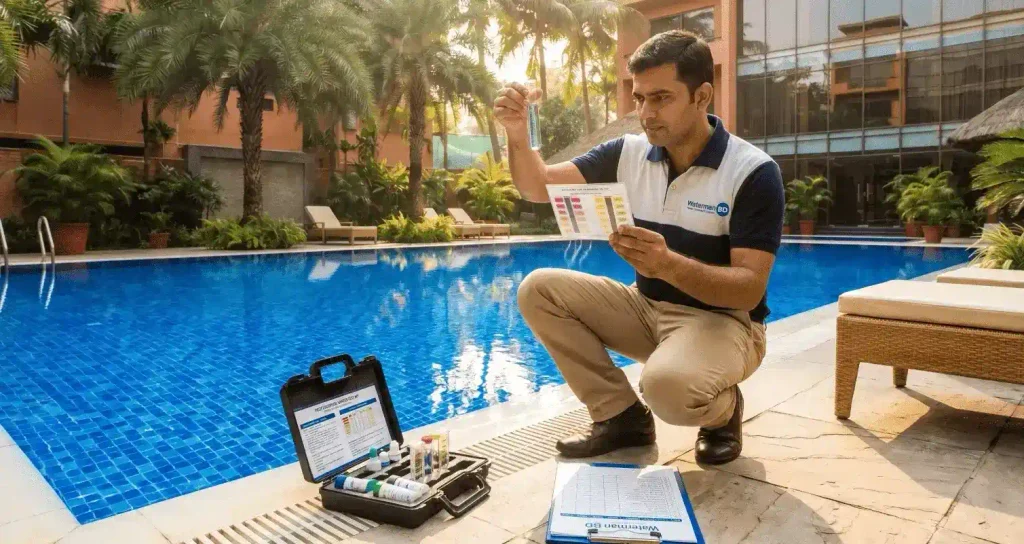
A treatment plant works best when the pool and its equipment are maintained regularly.
Basic maintenance practices include:
- Check the pool water condition regularly.
- Monitor chlorine and pH according to the treatment requirements.
- Remove visible debris from the pool.
- Clean or backwash filters as required.
- Inspect pumps, valves, and pipelines.
- Check for scaling or mineral buildup.
- Inspect chemical dosing equipment.
- Keep the surrounding pool area clean.
- Address unusual water color, odor, or clarity changes promptly.
- Follow the maintenance requirements of the installed equipment.
Maintenance frequency should depend on the pool’s usage, treatment system, water condition, and equipment requirements.
What Does WaterMan BD Offer for Swimming Pool Water Treatment?
WaterMan BD provides swimming pool water treatment plant solutions for residential, commercial, and community pools.
Its swimming pool treatment solution includes:
- Sand, cartridge, and DE filtration
- UV-C disinfection
- Chemical dosing
- Chlorine and pH management
- Corrosion-resistant system components
- Treatment solutions for different pool types
- Standard maintenance visits
- Plant overhaul after inspection
- Technical support from engineers and technicians
- Genuine parts and system warranty
- Scheduled and emergency service, subject to availability
WaterMan BD also lists swimming pool water treatment plants among its water treatment solutions.
If you are planning a new swimming pool treatment system or need to upgrade an existing pool, the treatment configuration can be considered based on the pool’s size, usage, existing equipment, and water condition.
Frequently Asked Questions
How much does a swimming pool treatment plant cost in Bangladesh?
There is no fixed price for every swimming pool treatment plant. The cost depends on factors such as pool size, filtration capacity, pump requirements, disinfection method, chemical dosing, equipment selection, installation requirements, and existing infrastructure.
Which filter is used for swimming pool water treatment?
Sand, cartridge, and DE filters are commonly used for swimming pool filtration. The appropriate filter depends on the pool size, water condition, required filtration level, and overall system design.
Is UV treatment necessary for a swimming pool?
UV treatment can be used as part of a swimming pool treatment system to help reduce microorganisms. Whether it is suitable for a particular pool depends on the overall treatment design and water-quality requirements.
How often should swimming pool water be treated?
Swimming pool treatment is an ongoing process rather than a one-time activity. Filtration, circulation, disinfection, chemical balancing, and cleaning should be carried out according to pool usage, water condition, equipment requirements, and the treatment system’s maintenance schedule.
Can an existing swimming pool be fitted with a treatment plant?
An existing swimming pool may be upgraded with a treatment system, but the pool size, available space, existing pumps and pipelines, water circulation, and current equipment should be assessed before selecting the system.
Does WaterMan BD provide swimming pool treatment plant maintenance?
Yes. WaterMan’s swimming pool treatment page lists standard maintenance visits and plant overhaul services. Maintenance charges vary based on the system size and location, while plant overhaul pricing is provided after inspection.
Making the Right Choice for Pool Water Treatment
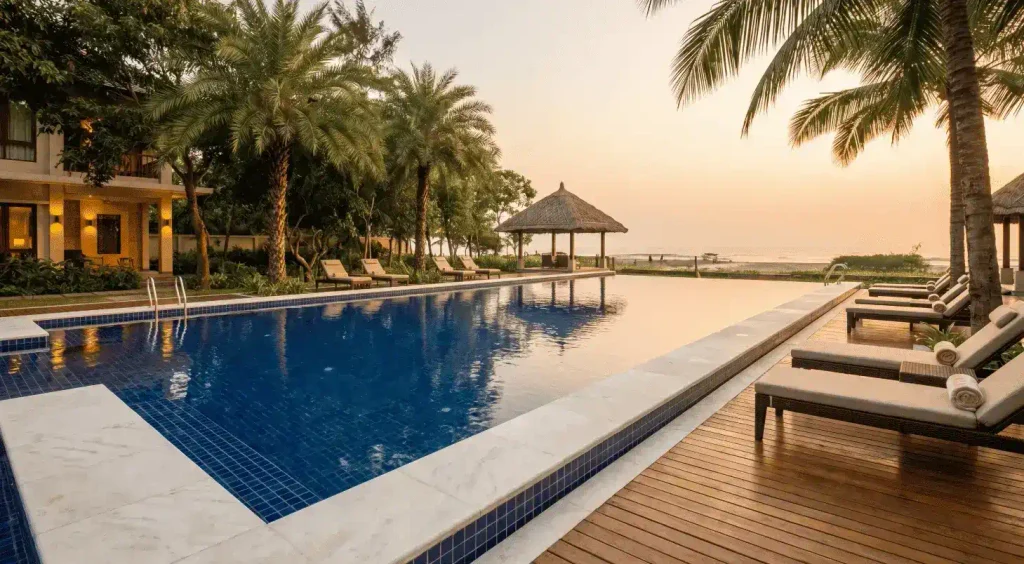
Proper swimming pool water treatment helps maintain water clarity, support hygienic swimming conditions, and protect pool equipment from issues such as dirt buildup, scaling, algae, and blockage.
A suitable treatment system may combine circulation, filtration, chemical dosing, UV disinfection, and regular maintenance. The right configuration depends on the pool size, usage, water condition, and existing infrastructure.
For swimming pool treatment plant requirements in Bangladesh, WaterMan BD provides treatment solutions covering filtration, UV disinfection, chemical dosing, installation, and maintenance for different types of swimming pools.
If you are planning a swimming pool treatment system, contact WaterMan BD to discuss your pool size, location, existing setup, and treatment requirements.