Iron in Your Water Is Costing You More Than You Think — Here Is the Full Picture
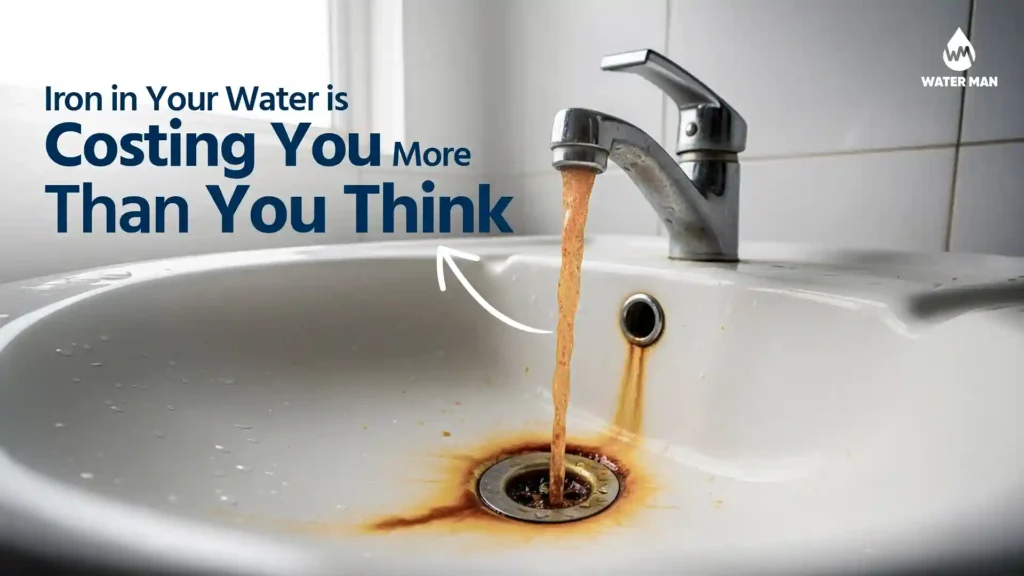
Turn on your tap. Is the water orange? Does it smell metallic? Are there rust-coloured stains around your sink, bathroom tiles, or overhead water tank?
If your answer is yes, your water has an iron problem. And if you are ignoring it, it is silently draining your money, damaging your property, and threatening your health every single day.
Iron contamination is not just an inconvenience. It corrodes your pipes, ruins your appliances, stains your clothes, irritates your skin, and — at high enough levels — puts your family’s long-term health at serious risk.
The solution? An iron removal plant — a dedicated water treatment system designed specifically to strip iron from your water supply at the source, protecting everything downstream.
But how much does it cost? Which system do you need? And how do you avoid paying too much for the wrong solution?
Waterman BD has answered every one of those questions in this complete, honest, and up-to-date guide.
What Is an Iron Removal Plant?
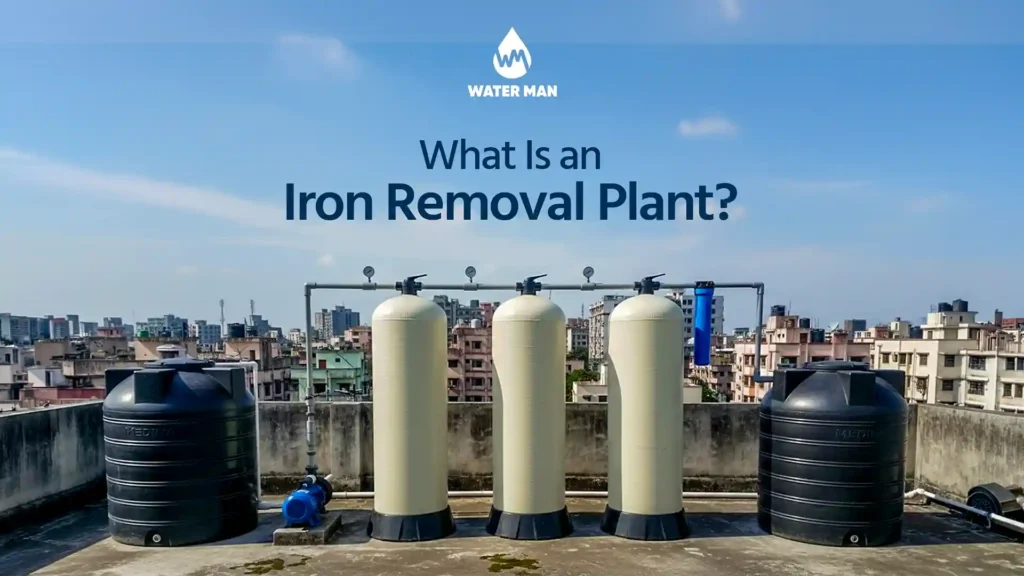
An iron removal plant — also called an iron removal filter system or iron treatment plant — is a water treatment setup specifically engineered to remove dissolved and suspended iron from water before it reaches your taps, appliances, storage tanks, or industrial equipment.
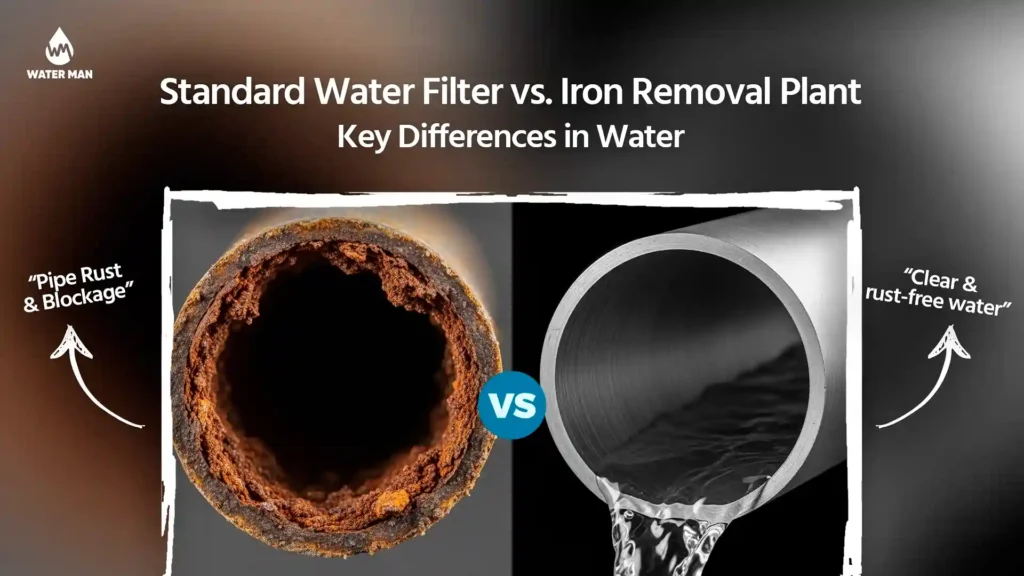
Unlike a standard water purifier or RO/UV filter — which targets bacteria and dissolved solids — an iron removal plant addresses the specific chemistry of iron contamination. It converts dissolved ferrous iron into solid ferric particles and then filters those particles out, delivering clean, iron-free water throughout your entire supply line.
Iron removal plants are available in a wide range of sizes and configurations:
- Compact household units for single homes and small apartments
- Mid-scale building systems for residential towers, housing complexes, and office buildings
- Large-scale industrial plants for factories, garment mills, food processing units, and commercial facilities
Each type is engineered differently, sized differently, and priced differently — which is exactly why this guide exists.
Why Iron Removal Is Different from Standard Water Filtration
Standard water filters — even quality RO and UV systems — are not designed to handle high iron loads. When iron-rich water enters an RO membrane without pre-treatment, it rapidly clogs the membrane surface, destroys filtration efficiency, and requires expensive early replacement.
An iron removal plant is the essential first step in any complete water treatment solution for iron-affected areas of Bangladesh.
How Does an Iron Removal Plant Work?
Understanding the process helps you evaluate systems intelligently and communicate effectively with suppliers. Here is how a professionally designed iron removal plant works:
Step 1 — Raw Water Intake and Pre-Screening
Source water — from a deep tubewell, shallow well, or municipal supply — enters the system through an intake pipe. A coarse pre-screen prevents sand, gravel, and large debris from entering the treatment vessel.
Step 2 — Aeration (Oxidation Stage)
This is the most critical step. Dissolved ferrous iron (Fe²⁺) is invisible in water — it passes straight through physical filters. To remove it, it must first be oxidised into insoluble ferric iron (Fe³⁺) — converting it from a dissolved state into solid particles that can be physically filtered out.
Step 3 — Retention / Oxidation Tank
After aeration, the water is held in a retention tank for a calculated contact time — typically 10–30 minutes — allowing the oxidation reaction to complete fully before filtration begins.
Step 4 — Multi-grade Sand Filter (MGF)
The pre-oxidised water enters a pressure sand filter vessel containing layers of graded sand and gravel. This stage removes larger ferric iron particles, suspended solids, and turbidity. The sand bed is backwashed regularly to flush out accumulated iron deposits.
Step 5 — Iron Removal Filter (IRF)
Water passes through a specialised filter media bed — typically manganese greensand, Birm, or manganese dioxide — that acts as both an oxidising agent and a physical filter for residual dissolved and particulate iron. This stage achieves final iron removal to safe output levels.
Step 6 — Activated Carbon Filtration (ACF)
For drinking or food-processing applications, a post-carbon filter removes any residual taste, odour, chlorine, or organic compounds from the treated water, producing clean-tasting, odour-free output.
Step 7 — Disinfection (Optional)
A UV disinfection unit or chlorination dosing system provides a final biological safety barrier — ensuring the iron-free output water is also free from bacteria, viruses, and other biological contaminants.
Step 8 — Clean Water Distribution
Treated, iron-free water flows into your overhead storage tank, pressure system, or directly into your supply lines — delivering clean water to every tap, appliance, and outlet in your facility.
Key Benefits of Installing an Iron Removal Plant
The return on investment from a properly sized and installed iron removal plant is rapid and measurable:
- Completely clear, rust-free water — from every tap, every time
- Protected plumbing infrastructure — no more iron scaling inside pipes, preventing costly blockages and replacements
- Extended appliance life — washing machines, water heaters, geysers, boilers, and kettles all last significantly longer
- Stain-free bathrooms, sinks, and tiles — the permanent orange staining problem disappears completely
- Better-tasting drinking water and food — iron-free water improves the taste of everything cooked or made with it
- Healthier skin and hair — bathing with iron-free water eliminates dryness, irritation, and hair discolouration
- RO membrane protection — for facilities with downstream RO systems, iron pre-treatment dramatically extends membrane life and reduces operating costs
- Industrial process quality improvement — cleaner water means better product consistency in manufacturing, food processing, and textile operations
- Regulatory and export compliance — iron-free process water helps meet BSTI and international quality standards
- Long-term cost savings — one properly sized iron removal plant saves lakhs of taka in plumbing repairs, appliance replacements, and water treatment costs over its operational life
Iron Removal Plant Price in Bangladesh — Complete 2026 Price Guide
This is the most important section for most buyers. Waterman BD provides a fully transparent, realistic, and current pricing overview for the Bangladesh market across all application categories.
Iron Removal Plant Price for Homes and Small Buildings
| System Type | Flow Rate | Application | Price Range (BDT) |
| Compact Household Iron Filter Unit | 500–1000 L/hr | Single home, 4–6 members | ৳65,000 – ৳1,10,000 |
| Household Iron Filter + UV Combo | 500–1000 L/hr | Home with biological risk | ৳75,000 – ৳1,25,000 |
| Small Building Iron Treatment System | 1000 – 4,000 L/hr | 5–10 flat apartment building | ৳1,25,000 – ৳4,00,000 |
| Medium Residential Building System | 4,000–6,000 L/hr | 10–25 flat complex | ৳4,00,000 – ৳8,00,000 |
Iron Removal Plant Price for Commercial Buildings and Offices
| System Type | Flow Rate | Application | Price Range (BDT) |
| Office / Small Commercial Unit | 500–1,000 L/hr | Office of 20–50 people | ৳65,000 – ৳1,10,000 |
| Restaurant / Hotel Iron Treatment | 1,000–4,000 L/hr | Restaurant, café, small hotel | ৳1,25,000 – ৳4,00,000 |
| Large Commercial Building System | 2,000–6,000 L/hr | Shopping mall, hotel, hospital | ৳1,80,000 – ৳5,00,000 |
| Large Residential Tower (50+ flats) | 3,000–8,000 L/hr | High-rise apartment complex | ৳3,00,000 – ৳8,00,000 |
Iron Removal Plant Price for Industries and Large Facilities
| System Type | Flow Rate | Application | Price Range (BDT) |
| Small Industrial Iron Plant | 5,000–10,000 L/hr | Small factory, processing unit | ৳4,00,000 – ৳10,00,000 |
| Medium Industrial Iron Plant | 10,000–30,000 L/hr | Garment factory, food processor | ৳4,00,000 – ৳25,00,000 |
| Large Industrial Iron Plant | 30,000–1,00,000 L/hr | Large factory, export zone | ৳25,00,000 – ৳80,00,000 |
| Custom Industrial Treatment Plant | 1,00,000+ L/hr | Power plant, heavy industry | ৳50,00,000 – ৳5,00,00,000+ |
Key Cost Components Breakdown
Understanding what drives the price helps you compare quotes intelligently:
| Cost Component | Approximate % of Total Cost | Notes |
| Filter vessels and media | 35–45% | Pressure vessels, greensand/Birm media (quality and origin) |
| Pumps and motors | 10–15% | Feed pump, backwash pump |
| UV / chlorination disinfection | 8–15% | Depends on application type |
| Control panel and automation | 5–15% | Manual vs automatic backwash |
| Pipework, fittings, valves | 8–12% | Stainless steel vs PVC options |
| Civil work and installation | 10–20% | Depends on site complexity |
| Commissioning and testing | 3–5% | Water quality verification |
Important Note: Iron removal plant pricing in Bangladesh varies significantly based on raw water iron concentration, required output flow rate, site accessibility, local civil work requirements, and selected media and component quality. Waterman BD provides free site assessment and detailed custom quotations — always get a site-specific quote before committing to any system.
Buying Guide: How to Choose the Right Iron Removal Plant in Bangladesh
Follow this structured, expert framework to make the right purchasing decision:
Step 1 — Get Your Water Tested Professionally
Never design a system without a professional water test. You need to know:
- Iron concentration (mg/L) — total, dissolved, and particulate
- pH level — critically affects oxidation efficiency and media selection
- TDS and hardness — affects overall treatment design
- Bacterial contamination — determines disinfection requirements
- Flow rate needed — litres per hour at peak demand
Waterman BD offers professional water testing and consultancy services across Bangladesh.
Step 2 — Calculate Your Peak Daily Water Demand
Undersizing is the most expensive mistake in iron plant procurement. Calculate your peak hourly demand — not average demand — and size your system at 120–130% of that figure to allow for growth and peak periods.
| Application | Approximate Daily Demand |
| Single household (5–6 members) | 500–800 litres/day |
| 10-flat apartment building | 5,000–8,000 litres/day |
| 50-flat residential tower | 25,000–40,000 litres/day |
| Small restaurant | 3,000–8,000 litres/day |
| Office of 50 staff | 2,000–5,000 litres/day |
| Small garment factory (500 workers) | 30,000–60,000 litres/day |
Step 3 — Choose the Right Filter Media for Your Iron Level
| Iron Concentration | Recommended Filter Media |
| Below 2 mg/L | Manganese, Birm, or standard greensand |
| 2–5 mg/L | Manganese greensand or Filox |
| 5–15 mg/L | Manganese dioxide (Filox-R or equivalent) |
| Above 15 mg/L | Custom multi-stage system — consult Waterman BD |
Step 4 — Decide: Manual vs. Automatic Backwash
Manual backwash systems are less expensive but require a staff member to initiate the backwash cycle on schedule.
Automatic backwash systems use a timer to backwash automatically without any human intervention — strongly recommended for commercial and industrial applications.
For households and small buildings, manual systems are cost-effective. For commercial and industrial buyers, automatic systems pay back their higher cost within the first year through consistent performance and zero labour cost.
Step 5 — Plan for Downstream Treatment
An iron removal plant removes iron, but it does not necessarily make water safe to drink directly. For drinking water applications, plan for:
- UV or chlorination disinfection for biological safety
- RO system for complete TDS, arsenic, and heavy metal removal (if required)
Step 6 — Verify Civil Work Requirements
An iron removal plant requires:
- A dedicated equipment room or pad (minimum 2×3 metres for household scale, larger for commercial)
- Access to electrical supply (for pump, UV, and controls)
- A drain connection for backwash discharge
- Overhead space for aeration tower (if applicable)
Ensure your site assessment includes a civil work evaluation. Waterman BD’s installation team handles all civil work requirements professionally.
Step 7 — Choose a Supplier with Proven Installation Experience
This is non-negotiable. Iron removal plant performance is entirely dependent on correct design and installation. Choose a supplier like Waterman BD with documented experience across all scales — from household units to industrial plants — and a strong local service network for ongoing maintenance support.
Maintenance Tips: Keeping Your Iron Removal Plant Performing at Its Best
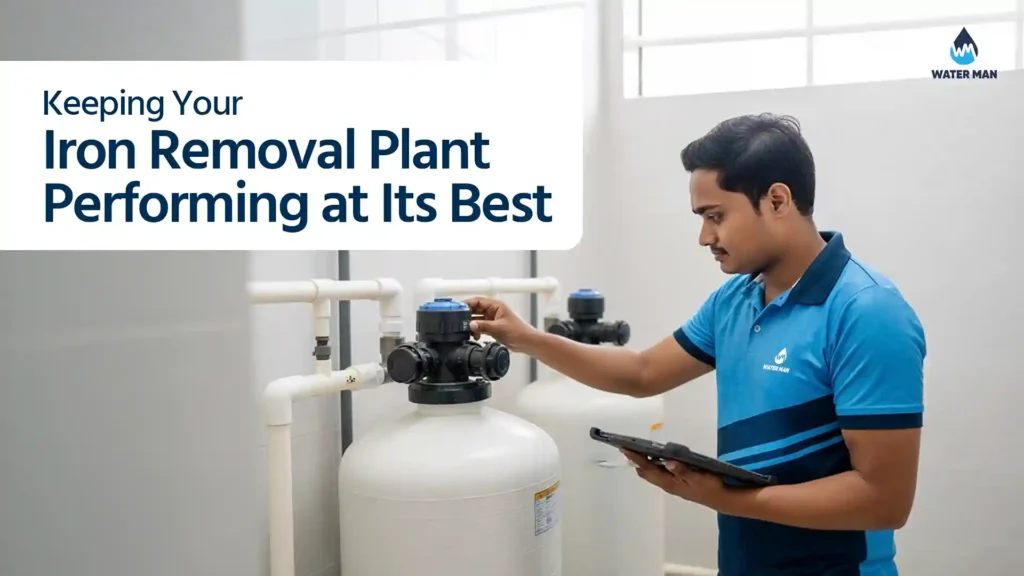
An iron removal plant is a mechanical system. Consistent, scheduled maintenance is what separates reliable long-term performance from costly breakdowns:
- Backwash the filter media on schedule — For household and commercial units, backwash every 3–7 days depending on iron load. For industrial systems, automated daily backwash is standard. Skipping backwash allows iron-saturated media to harden into a packed, ineffective mass.
- Replace UV lamps annually — UV lamps progressively lose disinfection intensity even while continuing to glow. Replace annually regardless of apparent condition.
- Check and replace aeration nozzles or diffusers every 12–18 months — These components accumulate iron deposits and lose efficiency if not serviced regularly.
- Inspect pump performance quarterly — Reduced flow rate is often the first sign of pump wear. Catching this early prevents complete pump failure during peak demand.
- Monitor output water quality monthly — Use a simple iron test kit to verify output iron levels. If the output iron is rising toward 0.3 mg/L, schedule immediate servicing.
- Clean and inspect the retention tank every 6 months — Iron sludge accumulates at the bottom of retention tanks and can re-enter the treatment stream if not periodically removed.
- Schedule Waterman BD Annual Maintenance Contract — Our service team covers media inspection and regeneration, UV lamp replacement, pump servicing, water quality testing, and backwash valve checks in a single planned visit — keeping your system in guaranteed peak condition year-round.
Common Mistakes to Avoid When Buying an Iron Removal Plant in Bangladesh
Mistake 1 — Sizing the system based on average demand instead of peak demand: Water demand in homes, offices, and factories peaks at specific times — morning, mealtimes, and shift changes. A system sized for average demand will consistently underperform during these critical periods, delivering partially treated water at peak times.
Mistake 2 — Skipping professional water testing and guessing the iron level: Every water source in Bangladesh has a different iron concentration, pH level, and contamination profile. A system designed without proper water test data will either be undersized (fails to remove all iron) or oversized (wastes significant capital investment).
Mistake 3 — Buying the cheapest available system without checking media quality: Iron removal performance is entirely dependent on filter media quality. Low-grade media exhausts within months, stops removing iron, and requires early replacement — costing far more than investing in quality media from the start.
Mistake 4 — Installing without considering the backwash discharge point: An iron removal system generates significant backwash wastewater loaded with concentrated iron sludge. Installing a system without a proper drain or disposal plan creates a messy, damaging overflow problem within weeks.
Mistake 5 — Assuming an iron plant also makes water bacterially safe: An iron removal plant removes iron — it is not a disinfection system. Without a UV or chlorination stage, iron-free output water may still carry dangerous bacterial contamination. Never use iron-treated water for drinking without a downstream disinfection stage.
Mistake 6 — Neglecting the backwash schedule: This is the number one cause of iron plant failure in Bangladesh. Operators skip backwashing to save time or electricity, the media bed compacts with iron deposits, and within weeks, the system loses most of its removal efficiency — while continuing to look operational from the outside.
Mistake 7 — Not planning for future expansion: Many businesses in Bangladesh are growing. A system sized exactly for today’s demand will be inadequate within 2–3 years. Build 25–30% extra capacity into your initial system design — the marginal cost at installation time is minimal compared to replacing the entire system later.
Mistake 8 — Choosing a supplier with no local service capability: An iron removal plant requires regular maintenance. A supplier who only sells and installs — with no ongoing service capability — leaves you entirely on your own when problems arise. Waterman BD maintains a full-service team and spare parts inventory specifically to avoid this situation for our clients.
Final Verdict: An Iron Removal Plant Is Not an Expense — It Is the Foundation of Your Water Infrastructure
If your home, building, or facility is supplied by iron-contaminated water — and in most of Bangladesh, it is — an iron removal plant is not optional. It is the essential foundation that protects everything else.
Without it, your pipes corrode from the inside. Your appliances fail early. Your RO membranes clog within months. Your products and food are compromised. Your family bathes in water that stains, irritates, and damages.
With the right iron removal plant, properly designed for your water chemistry and sized for your demand, installed by experienced engineers and maintained on schedule, all of that damage stops.
Whatever your scale — Waterman BD designs, supplies, installs, and maintains iron removal plants across Bangladesh. We handle the engineering, the civil work coordination, the commissioning, and the long-term servicing — so you can focus on what you do best.
Get Your Iron Removal Plant Designed, Priced & Installed — Contact Waterman BD Today!
Waterman BD is one of Bangladesh’s most trusted and experienced water treatment companies — delivering iron removal plants, RO systems, UV purifiers, water softeners, and complete water treatment solutions to households, commercial buildings, and industries across the entire country.
Why Bangladesh’s homes, buildings, and industries choose Waterman BD:
- Free professional water testing and detailed site assessment
- Custom-engineered iron removal plant design for your exact water chemistry and flow demand
- Genuine, certified components — pressure vessels, media, pumps, UV systems
- Competitive iron removal plant price in Bangladesh — transparent, all-inclusive quotations
- Professional civil work, installation, and commissioning by experienced engineers
- Annual maintenance contracts — scheduled service, spare parts, and water quality monitoring
- Emergency service support — we do not disappear after installation
- Full coverage across all districts of Bangladesh — from Dhaka to Chattogram, Sylhet to Khulna
Call or WhatsApp Waterman BD Right Now:
- Call Us: 01958251112, 01958251121
- WhatsApp: 01958251112, 01958251121
- Website: www.Waterman BD.com
- Facebook: https://www.facebook.com/Waterman BD
Iron in your water is not going away on its own. Call Waterman BD right now — and let us design the right solution for your home, your building, or your business.
Waterman BD — Engineering Clean Water for Every Home, Every Building, Every Industry.