A hot, cold and normal water dispenser provides three water temperature options from one unit. It can be a convenient solution for homes, offices, restaurants, clinics, schools, hotels and factories where people need drinking water throughout the day.
Instead of using separate appliances for hot and chilled water, a three-temperature dispenser allows users to get the water they need from dedicated outlets. Depending on the model, the dispenser can use a water jar, internal storage or a direct connection to a treated water supply.
For the right choice, consider the number of users, daily water consumption, water source, available space, dispenser material and whether an RO or filtration system is required.
What Is a Hot, Cold & Normal Water Dispenser?
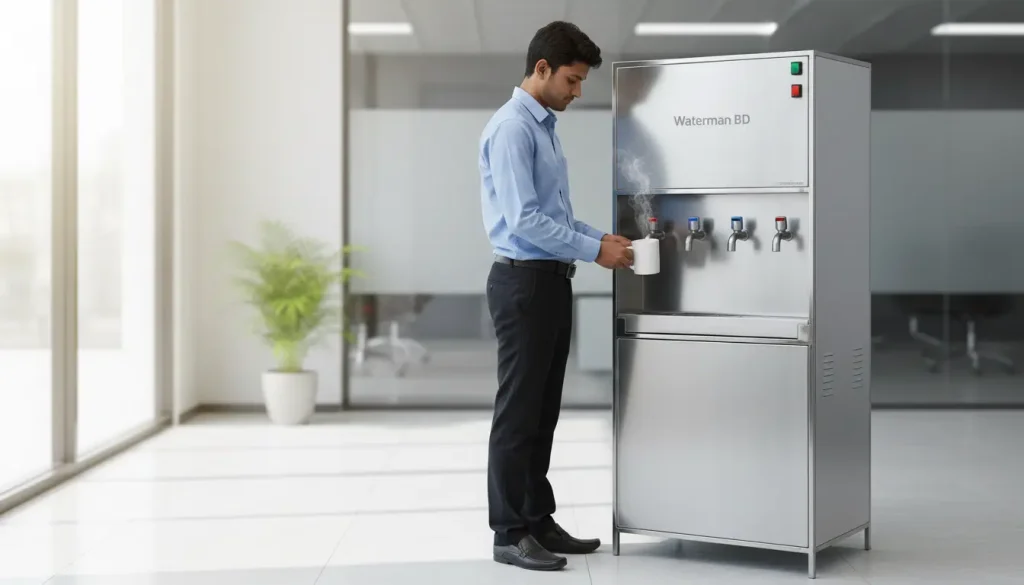
A hot, cold and normal water dispenser is designed to provide:
- Hot water – for tea, coffee, instant beverages and other everyday uses
- Cold water – chilled drinking water, particularly useful during Bangladesh’s warmer months
- Normal water – room-temperature water for regular drinking and other everyday needs
The exact temperature and dispensing capacity vary by model.
Some dispensers are designed mainly for household use, while others are built for commercial or industrial applications. Larger systems may also be connected to an RO water purification system or other treatment equipment.
Types of Water Dispensers in Bangladesh
1. Household Water Dispensers
Household water dispensers are generally compact and designed for homes, apartments and locations with moderate water consumption.
Many models use a top-loading water jar and provide hot and cold water. Depending on the model, normal-temperature water may also be available.
They can be suitable for:
- Homes and apartments
- Small offices
- Shops
- Clinics
- Small waiting areas
Their main advantages are simple installation, portability and relatively low space requirements.
2. Commercial Water Dispensers
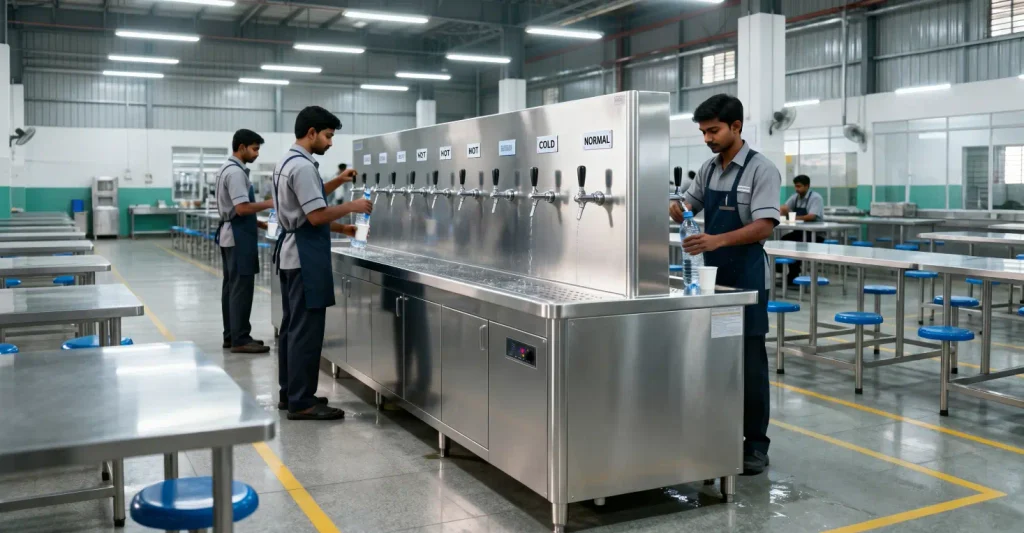
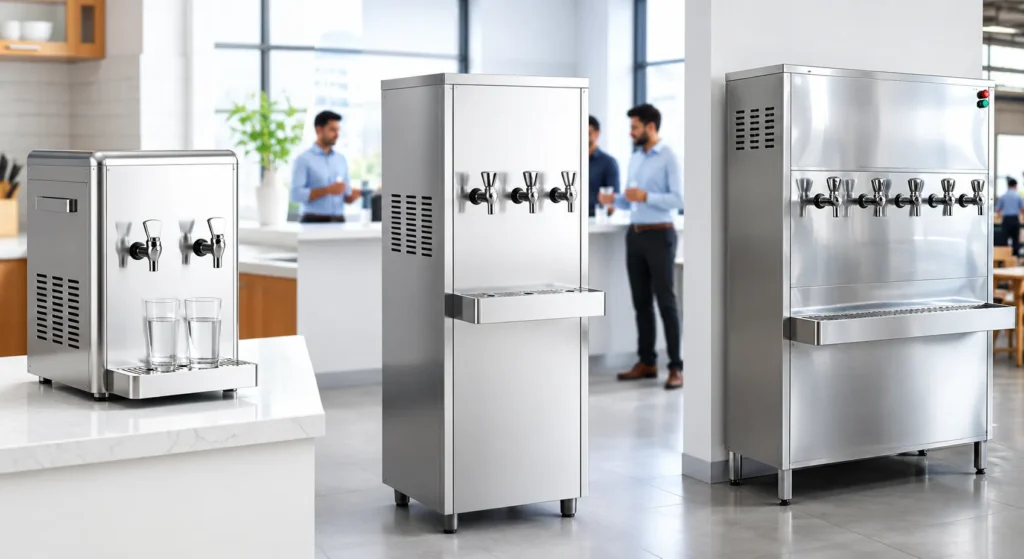
A commercial water dispenser is designed for environments where water demand is higher than a typical household.
Common applications include:
- Corporate offices
- Restaurants and cafés
- Hotels
- Schools
- Clinics
- Showrooms
- Commercial facilities
Stainless-steel construction is often considered for commercial environments because it provides a durable, easy-to-clean surface and a professional appearance.
3. Industrial Water Dispenser Systems
Large workplaces such as factories, hospitals and institutional facilities may need a customized dispensing system instead of a standard household unit.
An industrial water dispenser can be designed according to the facility’s expected water consumption, peak demand, number of users and number of dispensing points.
A customized setup may combine:
Water Treatment → Storage → Pumping → Cooling/Heating → Multiple Dispensing Points
This type of system can be useful where a large number of people need access to treated drinking water throughout the day.
Top-Load vs Direct-Line Water Dispenser
The way water enters the dispenser is another important consideration.
Top-Load Water Dispenser
A top-load dispenser uses an external water jar placed on top of the unit.
Advantages:
- Simple setup
- No permanent plumbing required
- Easy to relocate
- Suitable for homes and small offices
Limitations:
- Water jars need regular replacement
- Large bottles can be difficult to lift
- Water supply stops when the jar is empty
This configuration is generally more practical for locations with moderate water consumption.
Direct-Line Water Dispenser
A direct-line dispenser is connected to a fixed water supply. The incoming water can pass through a suitable filtration or RO system before reaching the dispenser.
Advantages:
- No regular water-jar replacement
- Suitable for higher water consumption
- Can be integrated with a water-treatment system
- Convenient for fixed commercial installations
Limitations:
- Requires plumbing and installation
- Less portable
- Connected filtration or treatment equipment needs regular maintenance
Direct-line systems are particularly useful for offices, restaurants, hotels, hospitals, factories and other commercial facilities.
SS vs Plastic Water Dispensers
The material used in a dispenser can affect its durability, appearance and suitability for different applications.
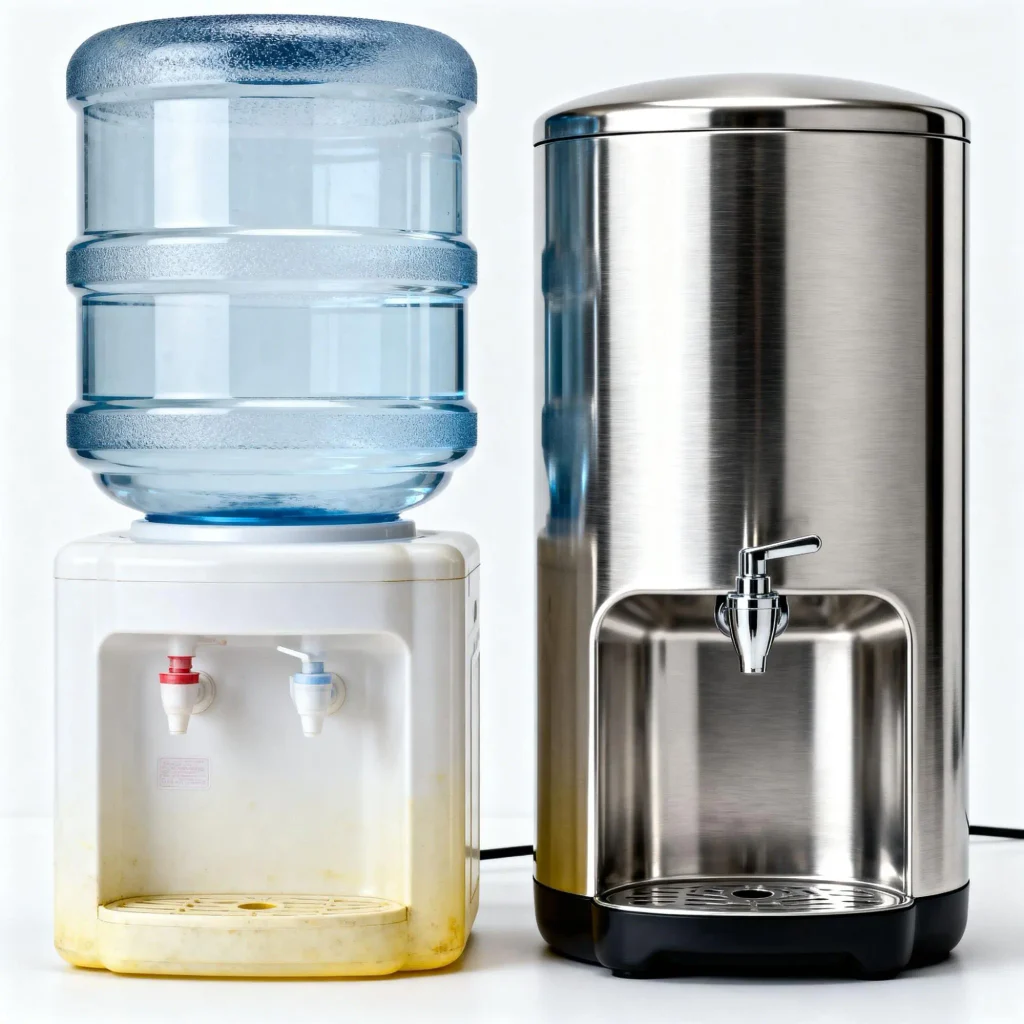
Plastic-Body Dispensers
Plastic-body models are commonly used for household and light-duty applications. They are generally lightweight and easy to move.
Their suitability depends on the construction quality, expected usage and the materials used in water-contact components.
SS Water Dispensers
An SS water dispenser uses stainless steel in its construction and is commonly considered for commercial and higher-use environments.
Stainless steel offers several practical benefits:
- Durable construction
- Easy surface cleaning
- Professional appearance
- Suitable for frequent use
- Good corrosion resistance when the appropriate grade is selected
SS304 Water Dispensers
SS304 is a commonly used stainless-steel grade for applications where corrosion resistance and suitable water-contact materials are important.
It may be considered for commercial kitchens, food-related facilities, healthcare environments, hotels and industrial applications.
When purchasing an SS304 dispenser, check which components are actually manufactured from SS304, particularly those that come into direct contact with water.
RO-Connected Water Dispenser in Bangladesh
A water dispenser controls water delivery and, depending on the model, heating and cooling. It does not automatically purify the incoming water.
If the source water requires treatment, the dispenser can be connected to an appropriate RO or water filtration system.
A typical setup may look like:
Raw Water → Pre-Filtration → RO System → Treated Water Storage → Water Dispenser
Depending on the source-water quality, additional treatment such as activated carbon filtration or UV disinfection may also be included.
This integrated approach can be useful for offices, factories, restaurants, hospitals, hotels and other facilities that need a regular supply of treated drinking water.
Water Dispenser Capacity: How Much Do You Need?
Choosing the right capacity starts with understanding actual water consumption.
Consider:
- Number of daily users
- Average daily drinking-water consumption
- Peak-hour demand
- Number of dispensing points
- Required hot and cold water volume
- RO or filtration capacity
- Storage tank capacity
A small household or office may only require a standard dispenser. Larger offices and commercial facilities may need a direct-line system, while factories and institutions may require a customized industrial setup.
The capacity of the water-treatment system, storage tank and dispenser should also be considered together rather than selecting each component separately.
Water Dispenser Price in Bangladesh
The water dispenser price in Bangladesh varies depending on the type, specifications and installation requirements.
| Water Dispenser Type | Typical Application | Price Depends On |
| Household / Jar-Fed | Home, small office | Model, cooling system and capacity |
| SS Commercial | Office, restaurant, clinic | Body material, cooling and storage capacity |
| SS304 Commercial | Hotel, hospital, food facility | SS304 specification, capacity and configuration |
| Industrial / Custom | Factory, large institution | Treatment capacity, storage, dispensing points and installation |
Household dispensers generally have a lower purchase cost than commercial stainless-steel systems. Customized industrial solutions can cost more because they are designed around the facility’s specific requirements.
When comparing prices, check whether the quotation includes installation, filtration, storage, fittings and after-sales service.
How to Choose a Water Dispenser for Your Office
If you are looking for a water dispenser for an office in Bangladesh, consider these points before purchasing.
Estimate Water Consumption
Start by considering the number of employees, visitors and working hours. This gives you a better idea of the required capacity.
Consider Peak Usage
Water consumption can increase during lunch breaks and other busy periods. The system should be able to handle these periods without creating unnecessary waiting.
Check the Water Source
If the office already has a suitable treated-water supply, a direct-line dispenser may be practical. If the source requires treatment, consider an RO or filtration system together with the dispenser.
Select the Right Material
Plastic models can be suitable for light-duty applications, while stainless-steel models can be considered for frequent commercial use.
Think About Maintenance
Before purchasing, check filter replacement requirements, cleaning procedures, servicing options and availability of spare parts.
Maintenance Tips for Water Dispensers
Regular maintenance helps maintain water quality and equipment performance.
- Clean the dispenser surface and taps regularly.
- Clean internal tanks according to the manufacturer’s instructions.
- Replace filters according to the recommended service schedule.
- Check direct water connections for leaks.
- Inspect heating and cooling components periodically.
- Remove mineral buildup from heating components when necessary.
- Arrange professional servicing for commercial and industrial systems.
For an RO-connected dispenser, maintaining the RO and filtration system is equally important because the quality of treated water directly affects the overall setup.
Frequently Asked Questions
What is a hot, cold and normal water dispenser?
It is a dispenser that provides hot, chilled and room-temperature water through separate outlets from a single unit.
Which water dispenser is suitable for an office in Bangladesh?
The suitable type depends on the number of users and daily water consumption. Small offices may use bottle-fed models, while larger offices can consider commercial direct-line dispensers connected to treated water.
What is the water dispenser price in Bangladesh?
The price depends on the model, body material, capacity, cooling system, filtration requirements, installation and other specifications. Household models generally cost less than commercial and customized industrial systems.
Can a water dispenser be connected to an RO system?
Yes. A compatible direct-line dispenser can be connected to an RO or suitable water-treatment system. The treatment, storage and dispensing capacity should be matched to expected consumption.
Is an SS water dispenser suitable for commercial use?
Stainless-steel dispensers are commonly considered for commercial applications because they are durable, easy to clean and suitable for frequent use. The appropriate stainless-steel grade depends on the application.
What type of water dispenser is suitable for a factory?
A factory with a large workforce may require a customized industrial dispensing system. Depending on the requirements, it can include water treatment, storage, cooling, heating and multiple dispensing points.
Water Dispenser Solutions from WaterMan BD
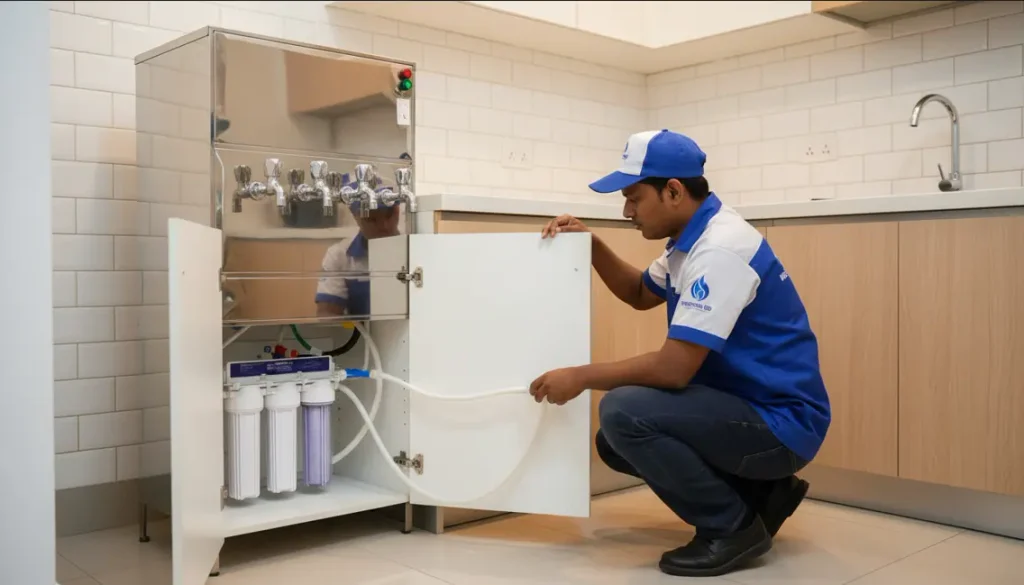
WaterMan BD provides water treatment and water dispensing solutions for homes, offices and commercial facilities in Bangladesh.
Depending on the application, options can include hot, cold and normal water dispensers, stainless-steel dispensing systems, RO-connected dispensers and customized water treatment solutions.
For businesses or facilities planning a water dispensing setup, factors such as number of users, expected water consumption, water source and location can help determine the right configuration.