Hard Water vs Iron Water is a common point of confusion for homeowners dealing with stains, mineral deposits and unusual changes in their household water. Both problems can affect water quality, plumbing fixtures, bathrooms and everyday cleaning, but they are caused by different dissolved substances.
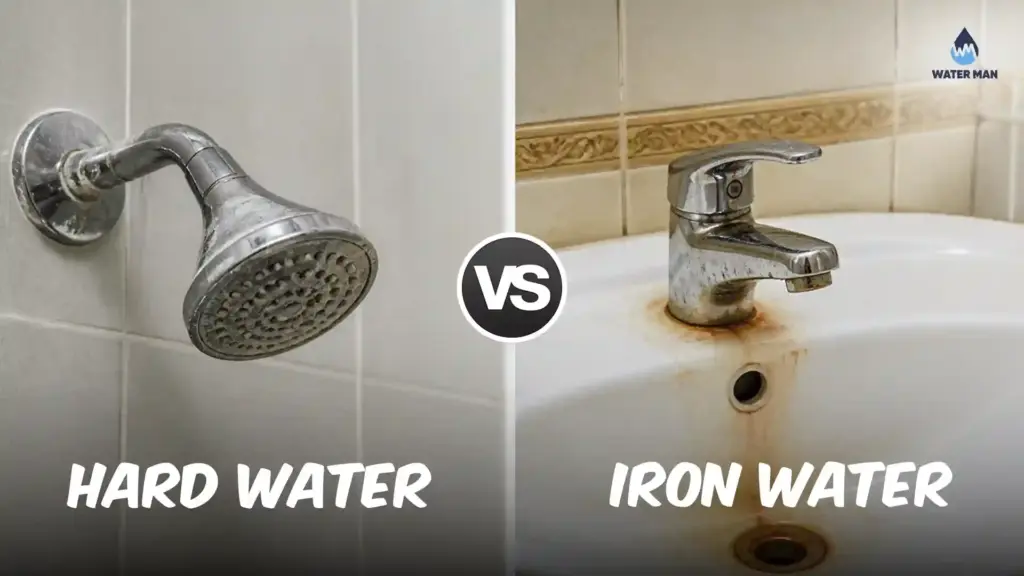
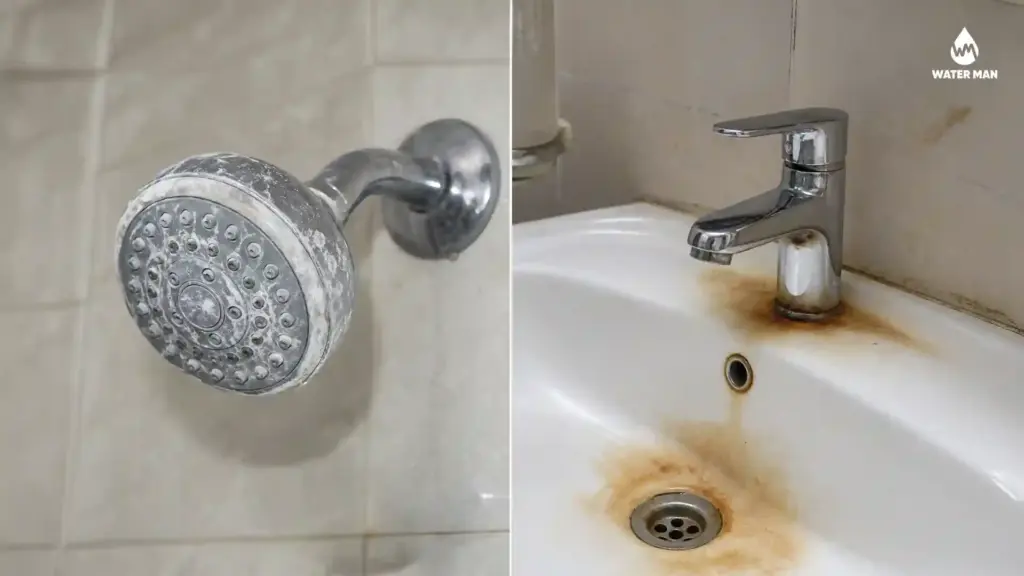
For example, white deposits around taps, showerheads and kettles may indicate hard water. On the other hand, reddish-brown stains on bathroom tiles, sinks and laundry may indicate excess iron in the water.
The distinction matters because the treatment methods are different. A water softener is generally used to reduce hardness, while an iron removal system is designed to remove excess iron. Choosing the wrong system may leave the original problem unresolved.
Understanding these differences is particularly useful for Bangladeshi households that depend on groundwater, tube wells or other local water supplies.
What Is the Difference Between Hard Water and Iron Water?
The main difference lies in the minerals responsible for each problem.
Hard water contains elevated concentrations of dissolved minerals, primarily calcium and magnesium. These minerals can accumulate on surfaces and form scale, particularly when water is heated.
Iron water contains elevated concentrations of dissolved or suspended iron. Depending on its chemical form and exposure to air, it may produce yellowish, orange or reddish-brown discoloration and stains.
Although both conditions can occur in groundwater, one does not automatically indicate the presence of the other.
A household can have hard water without excessive iron, iron-rich water without high hardness, or water containing both problems simultaneously.
The distinction is based on water chemistry, not simply how clear or cloudy the water looks.
6 Common Signs of Hard Water in Your Home
Hard water often creates problems gradually. You may not notice anything unusual when collecting water, but its effects become visible during washing, cleaning and heating.
1. White Deposits Around Taps and Showerheads
One of the most recognizable signs is a white or chalky deposit around taps, showerheads and bathroom fittings.
These deposits commonly develop when dissolved calcium and magnesium compounds form mineral scale as water evaporates or is heated.
2. Soap Does Not Produce Enough Foam
If soap and shampoo seem less effective than usual, water hardness may be contributing to the problem.
Calcium and magnesium react with certain soap ingredients, reducing lather formation and producing soap scum.
As a result, households may use more soap, detergent and cleaning products than necessary.
3. White Spots on Glassware and Kitchen Utensils
After washing dishes, you might notice cloudy marks or white spots on glasses, plates and steel utensils.
These deposits are often associated with mineral residue left behind when water dries.
4. Scale Inside Kettles and Water Heaters
Hard water can leave solid deposits inside kettles, geysers and other appliances that regularly heat water.
Over time, scale accumulation may reduce heating efficiency and increase maintenance requirements.
5. Laundry Feels Rough After Washing
Mineral deposits and soap residue can affect how fabrics feel after washing.
Clothes may appear less fresh, and additional detergent or repeated rinsing may be required.
6. Reduced Water Flow From Showerheads
When mineral deposits accumulate inside showerheads, small openings can gradually become blocked.
This may result in uneven water distribution or reduced flow.
6 Common Signs of Iron Water in Your Home
Iron-related water problems are often easier to recognize because of their effect on water colour and household surfaces.
However, dissolved iron may initially remain invisible, so clear-looking water does not necessarily mean that iron is absent.
1. Reddish-Brown Water After Standing
Water from a tube well or underground source may initially appear clear but develop a yellowish or reddish-brown colour after being exposed to air.
This can happen when dissolved ferrous iron oxidizes and forms less-soluble iron particles.
These particles may eventually settle at the bottom of a storage tank or container.
2. Red or Brown Stains on Bathroom Tiles
Persistent reddish or orange marks around sinks, toilet bowls, taps and bathroom tiles may indicate iron deposits.
These stains can become difficult to remove if they accumulate over time.
3. Laundry Develops Rust-Coloured Marks
Iron-containing water can leave yellow, orange or brown stains on white clothing, towels and other fabrics.
This is particularly frustrating when washing machines repeatedly use the same water supply.
4. Metallic Taste in Drinking Water
Some households notice a metallic or unpleasant taste when their water contains elevated iron.
Taste alone, however, cannot establish the actual iron concentration.
5. Brown Sediment in Water Storage Tanks
Iron particles may settle at the bottom of overhead tanks and storage containers.
When the accumulated sediment gets disturbed, water may temporarily appear muddy or discoloured.
6. Staining Around Water Outlets
Iron deposits can accumulate around taps, pipe connections and other areas where water regularly flows or dries.
If similar reddish-brown staining appears at several water outlets, the incoming water supply should be investigated.
The US Geological Survey explains that iron can give water a rusty reddish-brown or yellow appearance and leave similarly coloured particles. USGS: Water Quality Frequently Asked Questions.
Hard Water vs Iron Water: Key Differences at a Glance
The following comparison can help homeowners understand which problem their household may be experiencing.
| Household Observation | Hard Water | Iron Water |
| Main substances | Calcium and magnesium | Dissolved or suspended iron |
| Common appearance | Usually clear | May become yellow or reddish-brown |
| Common stains | White or chalky deposits | Orange, red or brown stains |
| Soap performance | Reduced lather | Not the primary identifying sign |
| Heating appliances | Mineral scale buildup | Iron deposits may accumulate |
| Laundry | Soap residue and cleaning difficulties | Rust-coloured stains |
| Common treatment | Water softener | Iron removal system |
Important: These are practical indicators, not definitive tests. Other minerals, pipe corrosion and water-quality problems can produce similar symptoms.
How to Test Whether Your Water Contains Hardness or Iron
The most reliable way to distinguish these problems is through separate water-quality tests.
A visual inspection can help identify possible symptoms, but it cannot accurately measure the concentration of calcium, magnesium or iron.
1. Test for Water Hardness
A water hardness test measures the concentration of hardness-causing minerals, generally expressed as mg/L or ppm as calcium carbonate (CaCO₃).
A laboratory test can determine whether the water is soft, moderately hard, hard or very hard.
One commonly used classification is:
| Total Hardness (mg/L as CaCO₃) | Classification |
| 0–60 | Soft |
| 61–120 | Moderately Hard |
| 121–180 | Hard |
| Above 180 | Very Hard |
These are commonly used descriptive categories, not universal safety limits.
2. Test for Iron Concentration
An iron test measures the amount of iron present in the water, generally in mg/L.
Testing is particularly important when water develops reddish-brown stains, metallic taste or visible sediment.
Depending on the source and treatment requirements, it may also be useful to distinguish dissolved iron from particulate iron.
3. Test Other Relevant Water Parameters
A complete household water assessment may include:
- pH
- TDS (Total Dissolved Solids)
- Total hardness
- Iron
- Manganese
- Arsenic
- Microbiological parameters
The exact testing requirements depend on the water source and intended use.
For example, TDS alone cannot confirm whether a household has hard water or iron contamination. These require specific tests.
The University of Florida IFAS household water testing guidance also recommends testing iron and hardness separately when investigating household water problems and selecting treatment equipment.
What Is the Right Treatment for Hard Water and Iron Water?
Identifying the problem is only the first step. The next step is selecting a treatment system based on the actual water analysis.
Water Softener for Hard Water
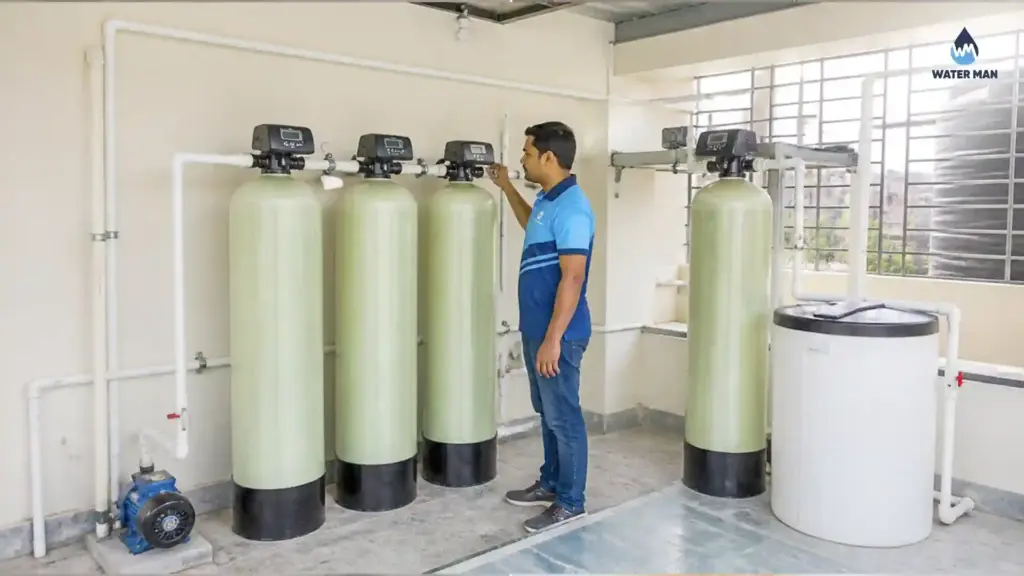
A conventional ion-exchange water softener is designed to reduce calcium and magnesium responsible for water hardness.
It generally works by exchanging hardness ions with sodium or potassium ions through a suitable resin.
A properly selected softener can help:
- Reduce mineral scale formation.
- Improve soap and detergent performance.
- Protect water heaters and plumbing from hardness-related deposits.
- Reduce maintenance associated with scale accumulation.
However, a standard softener is not a complete solution for every water-quality problem.
Iron Removal Filter for Iron Water
An iron removal system is designed to reduce excess iron from water.
Depending on the iron concentration, pH, dissolved oxygen and other water characteristics, treatment may involve:
- Aeration or oxidation.
- Iron oxidation using suitable treatment chemicals.
- Multimedia filtration.
- Manganese-based catalytic filtration media.
- Additional filtration or pretreatment where required.
The selected process must match the actual water chemistry.
For households with both hardness and iron problems, a combination of iron removal and water softening may be necessary.
An iron-rich water supply should be properly assessed before installing a conventional softener, as iron can interfere with resin performance and increase maintenance requirements.
Treatment sequence and filter media should be selected after testing rather than using the same configuration for every household.
Can Your Home Have Both Hard Water and Iron Water?
Yes. A household water supply can contain elevated iron and hardness at the same time.
This is particularly important for homes that use groundwater or tube-well water, where naturally occurring minerals can vary depending on local geology.
For example, a household might experience:
- White deposits around bathroom taps.
- Reddish-brown stains on bathroom tiles.
- Poor soap performance.
- Sediment collecting inside the overhead tank.
In this situation, installing only a water softener may not solve the iron problem. Similarly, an iron removal filter alone may not address hardness-related scale.
A combined treatment system may be appropriate, but its design should depend on laboratory results.
Bangladesh’s groundwater quality guidance also recognizes iron-related problems, including taste complaints and red staining on clothes. The Bangladesh DPHE Operational Guidelines for WASH discusses these practical water-quality concerns.
How Waterman BD Can Help You Identify the Right Water Treatment Solution
At Waterman BD, choosing a water treatment system should begin with understanding the actual problem rather than recommending a purifier based only on visible symptoms.
For households experiencing white mineral deposits, reddish-brown stains, unusual taste or sediment in stored water, the first step is to identify the relevant water-quality parameters.
Depending on the test results, the appropriate solution may involve:
- A residential water softener for hardness.
- An iron removal filter for excess iron.
- A combined iron removal and softening system.
- An RO water purifier for drinking-water applications where the source-water analysis and intended treatment requirements justify it.
Water treatment requirements can differ significantly between two nearby homes. Therefore, source-water testing, household consumption and installation requirements should all be considered before selecting equipment.
Waterman BD also provides water purifier installation, servicing and maintenance support to help households maintain their water treatment systems over time.
Frequently Asked Questions (FAQs)
1. How can I tell if my home has hard water or iron water?
White chalky deposits, scale and poor soap lather commonly indicate hardness. Reddish-brown stains, yellowish water and brown sediment may indicate iron. Separate water tests are needed for confirmation.
2. Does hard water cause red stains on bathroom tiles?
Hard water commonly leaves white or chalky mineral deposits. Red or orange stains are more commonly associated with iron, although other minerals and plumbing conditions can also contribute to staining.
3. Can a water softener remove iron from water?
A conventional ion-exchange softener is primarily designed to remove hardness. Some iron may be removed under specific conditions, but it should not be treated as a dedicated iron removal solution, particularly when iron concentrations are high.
4. Can iron water also be hard water?
Yes. Water can contain both elevated iron and calcium and magnesium. In that case, separate treatment stages may be required.
5. Is TDS enough to identify hard water or iron water?
No. TDS measures the combined concentration of dissolved substances, not the specific concentration of iron or hardness-causing minerals. Separate tests are necessary.
6. Is RO necessary for hard water and iron water?
Not always. A water softener or iron removal system may be more appropriate depending on the problem. RO may be considered for drinking-water applications when laboratory results indicate that dissolved contaminants require membrane treatment.
7. Should I test my water before purchasing a treatment system?
Yes. Testing helps identify the actual water-quality problem and prevents unnecessary equipment purchases. It also helps determine the appropriate treatment capacity and filtration arrangement.
Conclusion
Hard water and iron water may create similar frustrations around the home, but their causes and treatment requirements are different.
White mineral deposits, scale formation and poor soap performance often point towards hardness. Reddish-brown stains, discoloured water and sediment may indicate excess iron.
However, household symptoms should only be treated as initial indicators. A proper water-quality test is the most reliable way to determine what is actually present in your water.
Before investing in a water treatment system, identify the problem first. The right treatment should be selected according to the water analysis, household requirements and intended use.
Waterman BD helps households understand their water-quality problems and choose suitable purification and treatment solutions for their homes.