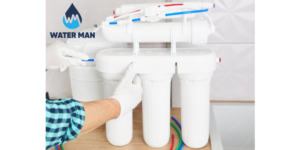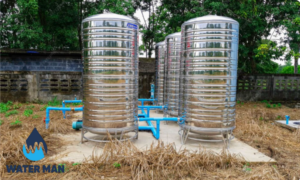
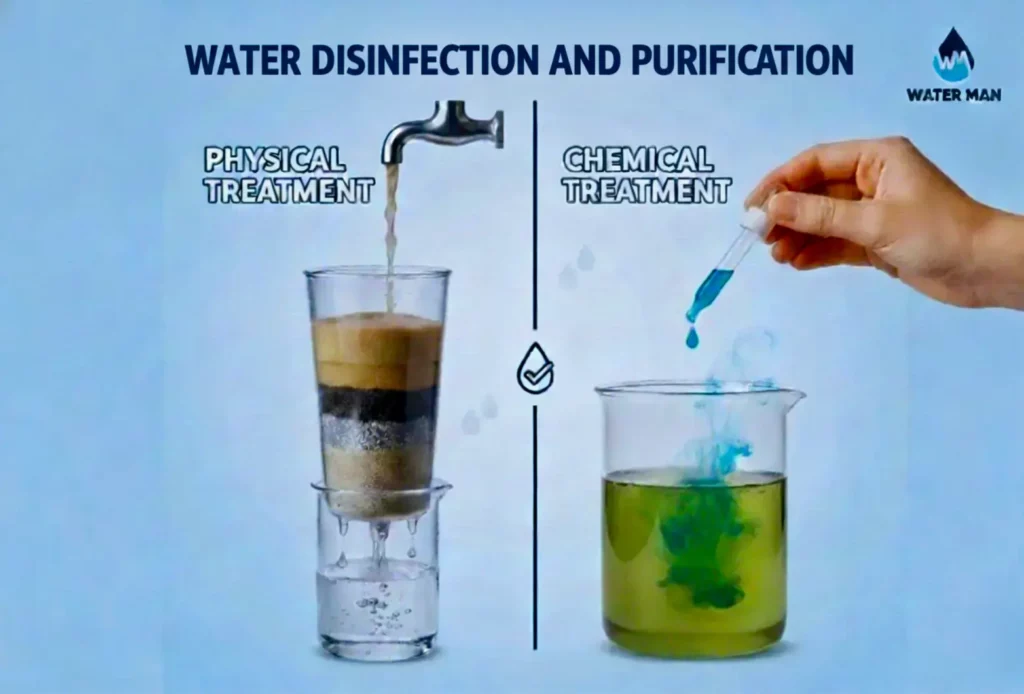
Water is essential for life, safe drinking water in Bangladesh is becoming harder to ensure, especially in a densely populated city like Dhaka. Dhaka water quality is affected by polluted surface water, contaminated groundwater, and aging supply pipelines that allow bacteria, heavy metals, and harmful chemicals to enter household water. Without proper treatment, these invisible contaminants can lead to serious health risks and waterborne diseases. The water purification process and water disinfection methods use physical and chemical water treatment techniques to remove these dangers and make water safe for daily use.
WaterMan BD helps families and businesses choose the right solutions by offering expert guidance, genuine water purifiers including reverse osmosis systems, and dependable support for safe drinking water through proven methods such as filtration and chlorination of water.
Water Treatment, Purification, and Disinfection Explained
- Water Treatment: A broad process that improves water quality by removing physical, chemical, and biological contaminants from water sources. This is a key part of ensuring safe drinking water in Bangladesh.
- Water Purification: Advanced treatment focused on making water suitable for drinking or specific uses. It addresses challenging Dhaka water quality and removes impurities that basic filtration cannot.
- Water Disinfection: The final and most critical step that kills or inactivates harmful microorganisms like bacteria, viruses, and protozoa. This ensures the water is biologically safe for daily consumption.
In real-life systems, these three processes usually work together, not separately.
Classification of Water Disinfection & Purification Methods
Water can contain many types of contaminants, including dirt, bacteria, viruses, heavy metals, and harmful chemicals. Because no single process can remove all of these at once, modern water treatment relies on different methods working together. These methods are generally grouped based on how they clean and disinfect water.
The two main categories are:
- Physical Methods
- Chemical Methods
Each of these plays a unique role in making water safe to drink. In the next section, we will start by exploring physical methods and how they remove impurities from water.
1. Physical Water Disinfection and Purification Methods for Safe Drinking Water
1.1 Boiling
How it Works: Boiling water at 100°C for 5–10 minutes kills most bacteria, viruses, and parasites, making it a simple form of water disinfection.
Advantages:
- Highly effective against pathogens
- Simple and chemical-free
Disadvantages:
- High energy cost
- Does not remove chemicals, salts, or heavy metals
- Not practical for large-scale or daily urban use
Bangladesh Context: Commonly used in rural households during emergencies, but boiling is not suitable for long-term water safety needs in Dhaka.
1.2 Filtration (Sand, Cartridge, Membrane)
a) Sand Filtration
How it Works: Water passes through layers of sand and gravel, removing suspended solids and some microorganisms.
Advantages:
- Low cost
- Reduces turbidity for clearer water
Disadvantages:
- Does not remove viruses or dissolved contaminants
Usage in Bangladesh: Widely used in municipal treatment plants and pond sand filters (PSF) in rural areas.
b) Cartridge & Sediment Filters
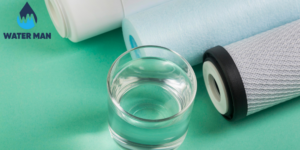
How it Works: Physically traps particles like sand, rust, and dirt, protecting advanced purification systems.
Advantages:
- Extends life of advanced filters
- Improves taste and clarity
Disadvantages:
- No disinfection capability
1.3 Membrane Filtration (UF, RO)
a) Ultrafiltration (UF)
Removes bacteria and suspended solids but allows dissolved salts to pass.
b) Reverse Osmosis (RO)
How it Works: Uses semi-permeable membranes and pressure to remove TDS, arsenic, heavy metals, bacteria, and viruses.
Advantages:
- One of the most effective purification methods
- Suitable for high TDS and contaminated groundwater
Disadvantages:
- Water wastage
- Requires electricity and maintenance
Bangladesh Context: Highly relevant due to arsenic, iron, and salinity issues in groundwater.
1.4 Ultraviolet (UV) Disinfection
How it Works: UV light damages the DNA of microorganisms, preventing reproduction and effectively disinfecting water.
Advantages:
- Chemical-free disinfection
- Effective against bacteria and viruses
Disadvantages:
- No residual protection
- Requires low-turbidity (clear) water
Common in Dhaka: Used in household purifiers along with sediment and carbon filters.
2. Chemical Water Disinfection and Purification Methods for Safe Drinking Water
In addition to widely used chemical disinfectants like chlorine and ozone, several secondary and emergency-level chemical methods are also practiced globally and locally. These methods are particularly relevant in household, emergency, rural, and low-infrastructure situations in Bangladesh.
2.1 Chlorination
How it Works: Chlorine kills microorganisms by damaging their cell structures and enzymes, making it one of the most widely used water disinfection methods.
Forms Used:
- Chlorine gas
- Bleaching powder
- Sodium hypochlorite
Advantages:
- Cost-effective
- Provides residual protection
Disadvantages:
- Can form harmful disinfection by-products (DBPs)
- Taste and odor issues
Bangladesh Context: Primary disinfection method used by WASA (Dhaka Water Supply and Sewerage Authority) to improve safe drinking water in Dhaka
2.2 Ozonation
How it Works: Ozone is a strong oxidizing agent that destroys bacteria, viruses, and organic compounds in water.
Advantages:
- Very powerful disinfectant
- Improves taste and color in water
Disadvantages:
- High cost
- No residual effect
Usage: Mostly used in industrial and bottled water plants for advanced water purification.
2.3 Chemical Coagulation & Flocculation
How it Works: Chemicals like alum cause fine particles to clump together for easier removal.
Advantages:
- Reduces turbidity effectively
- Improves water clarity
Disadvantages:
- Requires skilled operation
Bangladesh Context: An essential step in surface water treatment plants to improve Dhaka water quality.
2.4 Activated Carbon Treatment
How it Works: Activated carbon adsorbs chlorine, organic chemicals, pesticides, volatile organic compounds (VOCs), and unpleasant odors.
Advantages:
- Improves taste, odor, and color
- Removes chlorine and many organic contaminants
Disadvantages:
- Does not disinfect microorganisms
- Requires regular replacement to avoid bacterial growth
Bangladesh Context: Commonly used in household water purifiers as a pre-treatment and polishing stage, especially important for WASA-supplied water.
2.5 Silver & Nano-Silver Disinfection
How it Works: Silver ions (Ag⁺) disrupt the metabolic processes of bacteria and damage their cell walls. Nano-silver, due to its extremely small particle size, provides enhanced antimicrobial action by increasing surface contact with microorganisms.
Forms Used:
- Silver-impregnated ceramic filters
- Nano-silver-coated carbon or UF membranes
Advantages:
- Long-lasting antimicrobial effect
- Low chemical dosage required
- Effective against many bacteria
Disadvantages:
- Slow disinfection process compared to chlorine or UV
- Limited effectiveness against viruses
- Overuse may raise health and environmental concerns
Bangladesh Context: Widely used in ceramic candle filters and low-cost household filters, especially in semi-urban and rural areas.
2.6 Iodine Disinfection (Iodine Tablets / Pills)
How it Works: Iodine penetrates microbial cell walls and disrupts protein and nucleic acid structure, effectively killing bacteria and viruses.
Common Forms:
- Iodine tablets
- Tincture of iodine (emergency use only)
Advantages:
- Portable and easy to use
- Highly effective for emergency water treatment
Disadvantages:
- Not suitable for long-term use
- Alters taste and odor of water
- Not recommended for pregnant women, children, or people with thyroid conditions
Bangladesh Context: Primarily suitable for disaster relief, flood situations, travel, and emergency preparedness, not for daily household consumption.
2.7 Lime Treatment for pH Adjustment and Better Disinfection
How it Works: Lime (calcium hydroxide or calcium oxide) raises water pH, creating an unfavorable environment for many microorganisms. It is mainly used for pH correction, softening, and supporting disinfection efficiency, rather than direct pathogen killing.
Advantages:
- Controls water acidity
- Reduces corrosion in pipelines
- Improves efficiency of coagulation and chlorination
Disadvantages:
- Not a standalone disinfectant
- Overdosing can make water too alkaline and unsafe
Bangladesh Context: Used in municipal and industrial water treatment plants, especially where surface water treatment and pipeline protection are required.
How it Works: Adsorbs chlorine, organic chemicals, odor, and bad taste.
Advantages:
- Improves taste and smell
- Removes chemical contaminants
Disadvantages:
- Does not disinfect
Comparison: Physical vs Chemical Methods
| Aspect | Physical Methods | Chemical Methods |
| Microbial Removal / Kill | Partial to High (depends on method: Boiling, UV, RO, UF are highly effective) | High (Chlorine, Ozone, Iodine are very effective against bacteria, viruses, and protozoa) |
| Chemical / Contaminant Removal | Varies: High for RO, Medium for UF, Low for Boiling, Filtration; does not remove dissolved chemicals in most cases | Limited (mainly targets microorganisms; some methods like activated carbon can remove chemicals and odor) |
| Residual Protection | No residual effect (e.g., UV, RO, Boiling do not protect water after treatment) | Yes for chlorine and some other chemical disinfectants (provides ongoing protection in water distribution) |
| Operational Skill / Maintenance | Low to Medium (Boiling, Sand Filtration: low; RO, UF: medium due to maintenance and electricity needs) | Medium to High (Proper dosing of chlorine, ozone, or lime requires skill and monitoring) |
Water Treatment Challenges in Dhaka & Bangladesh
- Arsenic contamination in groundwater
- High iron and manganese levels
- Aging distribution pipelines causing recontamination
- Microbial risks due to leakage and illegal connections
Because of these challenges, multi-stage water purification systems are strongly recommended for households and commercial buildings.
Recommended Water Purification Approach for Urban Bangladesh
Ideal Household System:
- Sediment Filter
- Activated Carbon Filter
- Reverse Osmosis (if TDS is high)
- UV or Post-Chlorination
This combination ensures physical removal ,chemical safety and biological protection.
Choosing the Right Water Purification Approach
No single water treatment or disinfection method can guarantee completely safe drinking water. The ideal solution depends on the water source, type of contamination, and local conditions. In cities like Dhaka, where water quality can vary widely, combining physical and chemical water purification methods ensures the most effective and reliable protection for households and businesses.
WaterMan BD helps families and businesses select the right water purification solutions, offering expert guidance, authentic products, and dependable support for consistently safe drinking water.