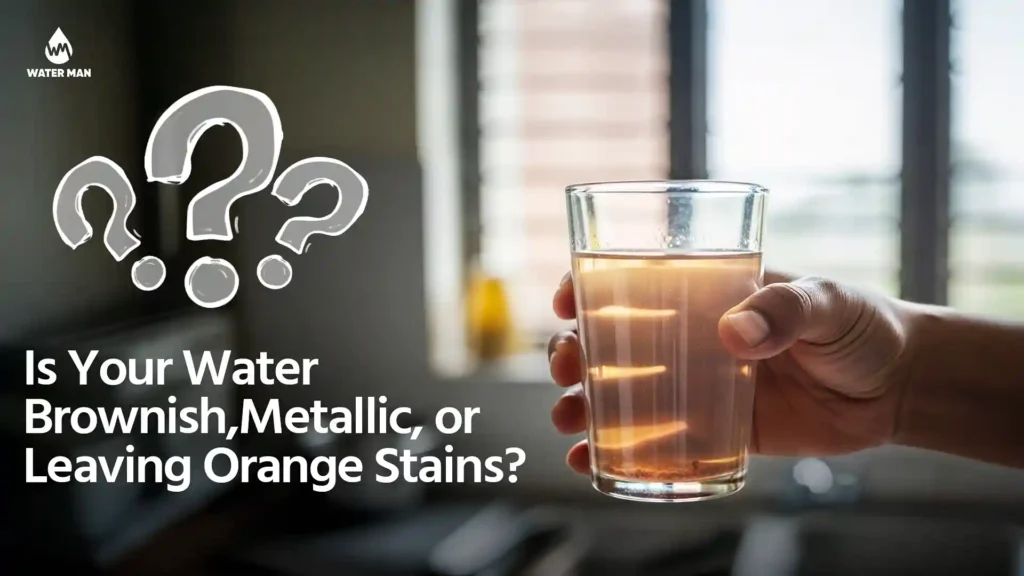
Are you looking for a solution to the iron problem in your water? Is Your Water Brownish, Metallic, or Leaving Orange Stains? Read This Now for a proper solution with expert tips.
Imagine filling a glass of water from your tap — and it comes out looking faintly yellow or rust-brown.
Or imagine waking up and turning on the bathroom tap, only to see orange-tinted water flow out. Your white sink has a stubborn rust-coloured ring that no amount of scrubbing can remove. Your clothes come out of the washing machine with yellowish stains. Your cooked rice has an odd metallic taste.
This is not a minor inconvenience. This is an iron contamination problem — and in Bangladesh, it affects millions of families every single day.
Iron in water is one of the most widespread and damaging water quality issues in Bangladesh. It is especially severe in districts that rely on deep tubewells and shallow aquifers. Yet most families do not know the full extent of the damage it is causing to their health, their home, and their daily life.
In this complete guide, Waterman BD will explain exactly what iron in water is, why it is so serious in the Bangladesh context, how it is removed, and what you should do right now to protect your family.
What is Iron a Problem in Water?
Iron is a naturally occurring mineral found abundantly in the soil and rock layers beneath the ground. As water moves through these layers — especially in Bangladesh’s deep aquifer systems — it dissolves iron and carries it along.
The result? Your tubewell, tap, or pipeline delivers water that carries elevated levels of dissolved or suspended iron — often far above the safe drinking limit.
The WHO (World Health Organization) safe limit for iron in drinking water is 0.3 mg/L (milligrams per litre).
In many parts of Bangladesh, iron levels in groundwater have been recorded at 2 to 20 mg/L — that is 7 to 65 times higher than the safe limit.
There are three main forms of iron found in water:
1. Ferrous Iron (Dissolved / Clear-Water Iron)
This type of iron is fully dissolved in water, so the water looks completely clear when first drawn. But when exposed to air and oxygen, it oxidizes and turns the water orange or brown. This is the most common form in Bangladesh’s deep tubewell water.
2. Ferric Iron (Particulate / Red-Water Iron)
This iron is already oxidized and exists as visible reddish-brown particles suspended in the water. Water containing ferric iron looks visibly cloudy, yellow, or orange even straight from the tap.
3. Bacterial Iron (Iron Bacteria)
Iron bacteria are microorganisms that feed on dissolved iron in water. They create a slimy, rust-coloured biofilm inside pipes, tanks, and pump systems. This form is particularly problematic in Bangladesh’s warm climate and is difficult to remove without specialized treatment.
Why Is Iron in Water Such a Serious Problem in Bangladesh?
Bangladesh’s geography and geology create the perfect conditions for iron contamination:
- Deep aquifer dependence: Millions of Bangladeshi households and communities depend on deep tubewells that tap into iron-rich underground water layers.
- Reducing groundwater conditions: Bangladesh’s waterlogged soil creates oxygen-poor underground conditions that keep iron dissolved in water — until it surfaces and oxidizes.
- Most affected districts include: Rajshahi, Bogura, Pabna, Sirajganj, Narayanganj, Gazipur, Mymensingh, Sylhet, Habiganj, Sunamganj, Comilla, and large parts of the Dhaka outskirts.
- Rural and peri-urban vulnerability: Millions of families in these areas have no alternative to iron-contaminated tubewell water for their daily drinking, cooking, and bathing needs.
- Seasonal worsening: During the dry season, water tables drop and iron concentration in groundwater increases significantly — making the problem worse from November through April.
How Does Iron in Water Create Problems for Your Health, Home, and Daily Life?
Iron contamination causes damage in three major areas:
Health Effects
While iron is technically an essential mineral for the human body, excess iron from water is a different matter entirely:
- Gastrointestinal problems: High iron intake from drinking water can cause nausea, vomiting, stomach cramps, and diarrhoea — especially in children and elderly individuals.
- Liver and organ damage: Long-term consumption of water with very high iron levels has been linked to liver cirrhosis, joint pain, and damage to the pancreas — a condition known as haemochromatosis.
- Increased risk of infection: Iron-rich water promotes bacterial growth, including iron bacteria, which produce harmful byproducts and biofilm that introduce additional pathogens into your drinking water.
- Skin and hair damage: Bathing or washing with iron-rich water causes dry, irritated skin and weakened, discoloured hair. The iron deposits coat hair follicles and skin pores.
- Dental staining: Regular consumption of high-iron water can cause yellowish or brownish staining on teeth over time — particularly in children.
Home and Property Damage
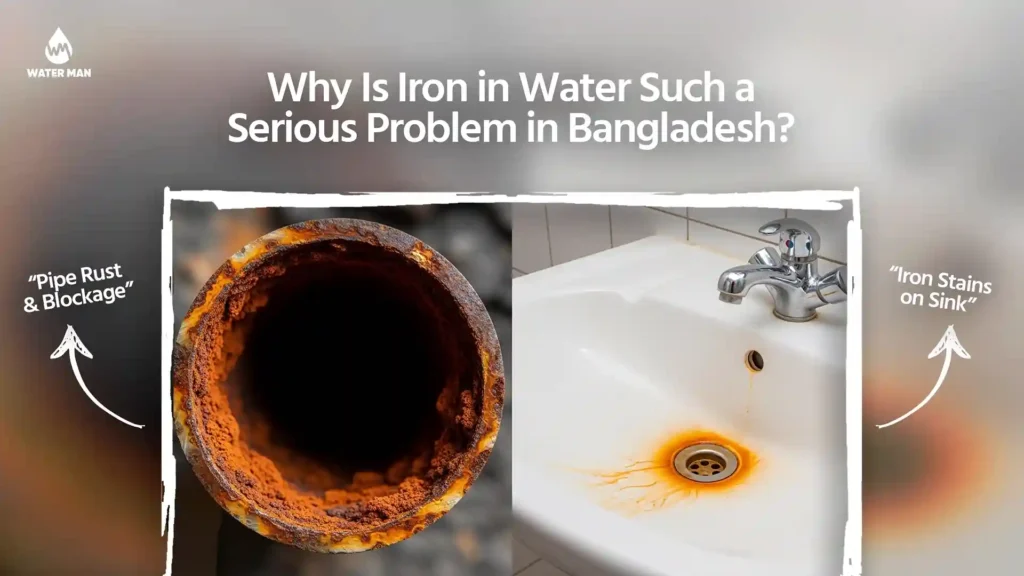
- Permanent orange stains on sinks, bathtubs, toilets, and tiles that are extremely difficult to remove
- Rust-coloured deposits in water tanks, overhead reservoirs, and storage containers
- Clogged and corroded pipes as iron deposits build up layer by layer over months and years
- Damage to washing machines — iron deposits on heating elements and drum interiors shorten appliance life
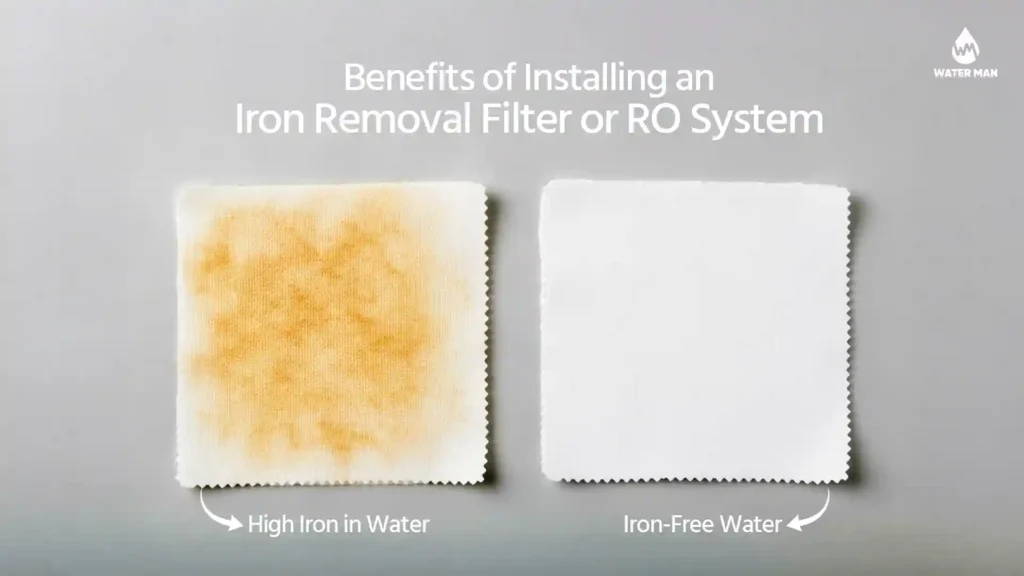
- Stained clothing and linens — white and light-coloured fabrics develop permanent yellowish or orange stains after washing in iron-rich water
Food and Cooking Effects
- Water with high iron content gives tea, coffee, rice, and dal a metallic, bitter, or unpleasant taste
- Food cooked in iron-rich water can develop abnormal coloration — particularly foods like eggs, potatoes, and rice
- Iron water reduces the effectiveness of common household cleaning products and detergents
How Is Iron Removed from Water? (Step-by-Step Solution Process)
Removing iron from water requires the right treatment method matched to the type and concentration of iron present. Here are the most effective methods:
Method 1 — Oxidation + Plant Filtration System (Most Common and Effective)
This is the most widely used and reliable method for iron removal in Bangladesh, especially for tubewell water with dissolved ferrous iron.
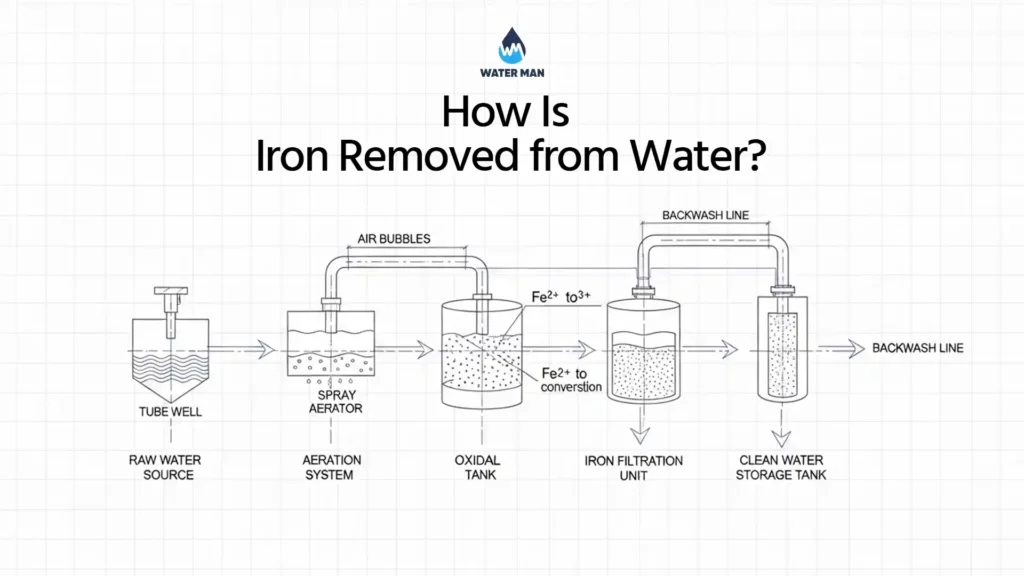
Step 1 — Aeration / Oxidation: The water is exposed to air — either by spraying it, cascading it over trays, or injecting air — so that dissolved ferrous iron is converted (oxidized) into solid ferric iron particles.
Step 2 — Sedimentation: The oxidized iron particles settle to the bottom of a holding tank through gravity — a process called sedimentation.
Step 3 — Manganese Filtration: The water passes through a filter media bed — typically green sand, birm, or manganese dioxide — that captures the remaining iron particles, removing them from the water.
Step 4 — Carbon Filtration: A carbon filtration stage is added to remove any bad taste or odor remaining in the water.
Step 4 — Disinfection: A UV stage may be added to kill any iron bacteria or other pathogens remaining in the water.
Step 5 — Storage and Distribution: Clean, iron-free water is stored in a clean overhead tank or pressure system and distributed through your home.
Best for: Day-to-day use in households, industries, and offices.
Method 2 — RO (Reverse Osmosis) Water Purifier
An RO system is highly effective at removing dissolved ferrous iron from drinking water. The RO membrane physically blocks iron ions from passing through. For the best results, a sediment pre-filter must be installed first to remove any particulate ferric iron that could clog the membrane.
Best for: Drinking and cooking water in households and offices.
Method 3 — Iron Removal Filter (Dedicated Iron Filter)
A dedicated iron removal filter uses a PP (Polypropylene) filter trap dissolved and particulate iron in a single housing filter. These can be installed as whole-house systems, single taps, or as one, two or three-stage systems, protecting all your taps, appliances, and pipes simultaneously.
Best for: Whole-house iron removal, single tap iron removal, especially for tubewell-dependent homes.
Method 4 — Chemical Dosing (Industrial Use)
For large-scale applications — such as water treatment plants, factories, and large residential complexes — chemical oxidants like chlorine or potassium permanganate are dosed into the water to accelerate iron oxidation before filtration.
Benefits of Installing an Iron Removal Filter or RO System
Investing in a proper iron removal solution delivers immediate and long-term benefits for every Bangladeshi household:
- Crystal-clear, odour-free drinking water — No more rusty colour, metallic taste, or rotten egg smell
- Protected health — No excess iron ingestion, reduced risk of gastrointestinal issues, and long-term organ damage
- Cleaner skin and hair — Bathing with iron-free water eliminates dryness, irritation, and discolouration
- Stain-free bathrooms and kitchen — No more orange rings on sinks, tiles, or toilets
- Extended appliance life — Washing machines, geysers, and kettles last significantly longer without iron deposits
- Better tasting food and beverages — Tea, rice, and cooking water taste clean and natural
- Brighter, undamaged laundry — Clothes stay white and colourful without rust staining
- Cleaner pipes with better water pressure — Iron deposits no longer narrow and block your plumbing
- Long-term cost savings — Less money spent on cleaning products, appliance repairs, plumbing, and medical visits
Iron Removal Filter and Water Purifier Price in Bangladesh (2026)
Here is a realistic pricing guide for the Bangladesh market to help you plan your investment:
| Product | Price Range (BDT) | Best Application |
| Basic Inline Iron Pre-Filter | ৳1,200 – ৳4,000 | Protecting the RO membrane from iron |
| Dedicated Household Iron Removal Filter/Plant | ৳80,000 – ৳20,000 | Single household, tubewell water |
| RO Purifier with Iron Pre-Filter (5–7 stage) | ৳15,000 – ৳32,000 | Drinking and cooking water |
| Whole-House Iron Removal System | ৳75,000 – ৳5,00,000 | Full home protection, all taps |
| Semi-Commercial Iron Filter (Restaurants, Offices) | ৳90,000 – ৳1,50,000 | Restaurants, small factories |
| Industrial Iron Removal Plant | ৳1,50,000 – ৳10,00,000+ | Large factories, housing complexes |
Waterman BD Tip: For most Bangladeshi families using tubewell water, a combination of a dedicated iron removal pre-filter + a quality 5-stage RO purifier offers the safest and most complete solution for drinking water — removing iron, arsenic, bacteria, and all other major contaminants together.
Buying Guide: How to Choose the Right Iron Removal Solution for Your Home
Use these six steps to make the right, informed decision:
Step 1 — Get Your Water Tested First
The first and most important step is knowing exactly how much iron is in your water and what form it is in. Waterman BD offers professional water testing services and consultancy services.
Step 2 — Know Your Iron Level
- Iron below 0.5 mg/L → A quality RO purifier alone is often sufficient
- Iron between 0.5–3 mg/L → A dedicated iron pre-filter before the RO system is recommended
- Iron above 3 mg/L → A whole-house iron removal filter system is essential
Step 3 — Determine What You Want to Protect
- Drinking and cooking water only → RO system with iron pre-filter
- All taps, appliances, and pipes → Whole-house iron removal filter system
- Both comprehensively → Whole-house iron filter + point-of-use RO for drinking water
Step 4 — Check for Iron Bacteria
If your water has a slimy, oily film on the surface or you notice slime inside your water tank or pipes, iron bacteria are present. This requires a specialized treatment approach — contact Waterman BD for a proper site assessment.
Step 5 — Match Capacity to Your Usage
- Small household (2–4 members) → 50–75 GPD RO system with iron pre-filter
- Medium household (4–6 members) → 75–100 GPD system
- Restaurant/office → 200–500 GPD commercial grade system
- Factory/housing complex → Custom-designed iron removal plant
Step 6 — Choose a Certified Supplier with After-Sales Support
This is critical. Always purchase from a reliable, certified dealer like Waterman BD who provides professional installation, genuine filter media and membranes, and ongoing maintenance services. Cheap, uncertified iron filters from the open market often use substandard media that quickly become exhausted and stop removing iron within weeks.
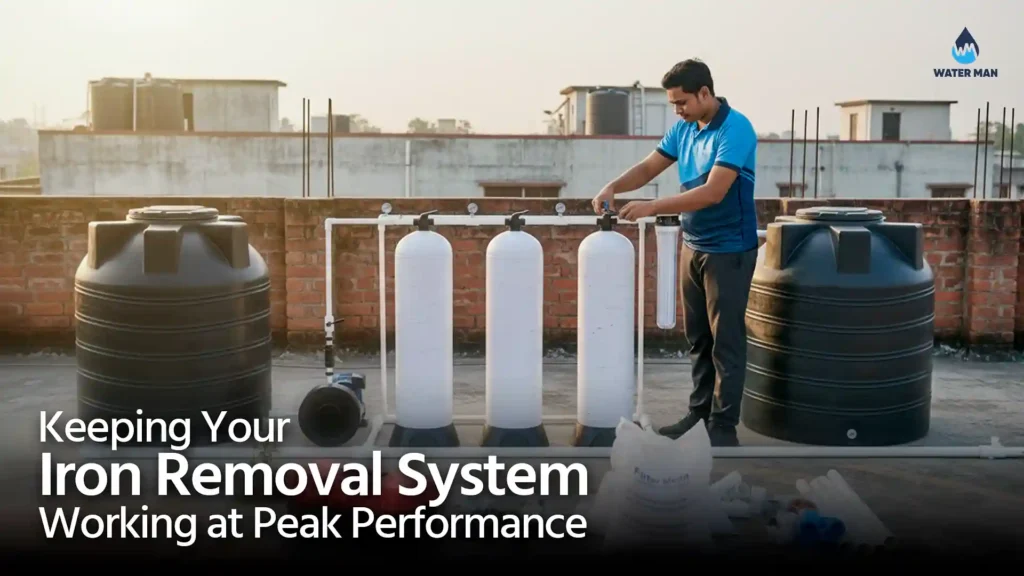
Maintenance Tips: Keeping Your Iron Removal System Working at Peak Performance
An iron removal system is a long-term investment. Keep it performing at its best with these essential maintenance practices:
- Backwash your iron filter media regularly — Most iron removal filters require weekly or bi-weekly backwashing to flush out trapped iron particles and regenerate the filter media bed. Follow the manufacturer’s schedule strictly.
- Replace filter media every 3–5 years — Manganese greensand and similar filter media eventually exhaust their oxidizing capacity. Periodic media replacement maintains full iron removal efficiency.
- Replace RO membranes every 12–18 months — Iron can reduce RO membrane life faster than normal if pre-filtration is inadequate. Monitor your TDS levels to know when the membrane needs changing.
- Replace sediment pre-filters every 2–3 months — In high-iron water areas of Bangladesh, sediment filters can clog much faster than normal. Check and replace them frequently to protect downstream equipment.
- Clean your water tank and overhead reservoir every 6 months — Iron bacteria and sediment accumulate in tanks over time. Regular cleaning with a dilute chlorine solution prevents biofilm formation.
- Inspect pipe fittings and connections annually — Iron-rich water accelerates corrosion at pipe joints and fittings. Annual inspection by a Waterman BD technician catches problems early before they become expensive repairs.
- Schedule a Waterman BD annual service visit (AMC)— Our certified technicians will test your water output, inspect all components, replace worn parts, and ensure your system is delivering consistently safe, iron-free water.
Common Mistakes Bangladeshi Families Make with Iron-Contaminated Water
Mistake 1 — Using a regular water purifier without an iron pre-filter: Standard RO systems and UV purifiers are not designed to handle high iron levels. Without an iron pre-filter, excess iron rapidly clogs and destroys the RO membrane — costing you far more in replacements than an iron pre-filter would have cost.
Mistake 2 — Assuming the water is safe because it looks clear: Dissolved ferrous iron makes water look completely clear when first drawn. Many families assume their water is fine — not knowing it has iron levels many times above the safe limit. Always test — never judge by appearance alone.
Mistake 3 — Trying to solve iron staining with cleaning products alone: Scrubbing your sink and tiles with cleaning agents treats the symptom, not the cause. The staining will return within days if the underlying iron problem is not treated at the water source.
Mistake 4 — Neglecting to backwash the iron filter: This is the most common maintenance mistake. Skipping backwashing allows trapped iron to accumulate in the filter bed until the media becomes saturated and iron passes through unfiltered — contaminating your “filtered” water.
Mistake 5 — Buying an undersized system: A filter designed for light iron contamination will be overwhelmed by Bangladesh’s often severely iron-rich tubewell water. Always size your system based on actual water test results — not guesswork.
Mistake 6 — Ignoring iron bacteria: Many families treat the iron mineral problem, but overlook the iron bacteria issue. If iron bacteria are present, they will continue to form biofilm in pipes and tanks, causing persistent taste, odour, and contamination problems even after iron mineral levels are reduced.
Mistake 7 — Delaying action to save money: The cost of one appliance repair — a damaged washing machine, a corroded water heater, or a blocked plumbing system — often exceeds the entire cost of a quality iron removal filter. Delay is never the cheaper option.
Final Verdict: Iron in Water Is a Serious Problem— But It has a Complete Solution
Iron contamination in Bangladesh’s water supply is one of the most common, most damaging, and most underestimated water quality problems facing Bangladeshi families today.
It stains your home. It damages your appliances. It shortens the life of your pipes. It affects your skin, your hair, your food — and over time, your health.
But here is the critical point: this problem is fully solvable with the right water treatment system.
You do not have to live with rusty water, orange stains, metallic-tasting tea, or damaged clothes. The solution exists. It is affordable. It is available. And Waterman BD is ready to deliver it to your door — anywhere in Bangladesh.
Whether you need a simple iron pre-filter for your drinking water, a whole-house iron removal system for a large family home, or an industrial iron treatment plant for your factory or housing complex — Waterman BD has the right solution, the right product, and the right team to handle it.
Your family deserves water that is genuinely clean. Take action today.
Remove Iron from Your Water Today — Contact Waterman BD!
Waterman BD is Bangladesh’s trusted partner for complete water purification — from iron removal filters and RO systems to UV purifiers, installation, and long-term maintenance. We serve households, offices, restaurants, hotels, and industries across the entire country.
When you choose Waterman BD, you get:
- Free water testing and expert consultation
- Genuine, certified iron removal filters and RO systems
- The best water filter price in Bangladesh — no hidden costs
- Professional installation by trained and certified technicians
- Reliable after-sales service, maintenance, and filter replacement
- Delivery and services are available across all major districts of Bangladesh
Contact Waterman BD Right Now for Iron Problem and Solution in Bangladesh— Do Not Wait Another Day:
- Call Us: 01958251112
- WhatsApp: 01958251112
- Website: WaterMan BD
- Facebook: WaterMan BD
One call to Waterman BD is all it takes to say goodbye to rusty, iron-contaminated water — forever.
Waterman BD — Pure Water. Right Price. Expert and Professional Service. Complete Peace of Mind.