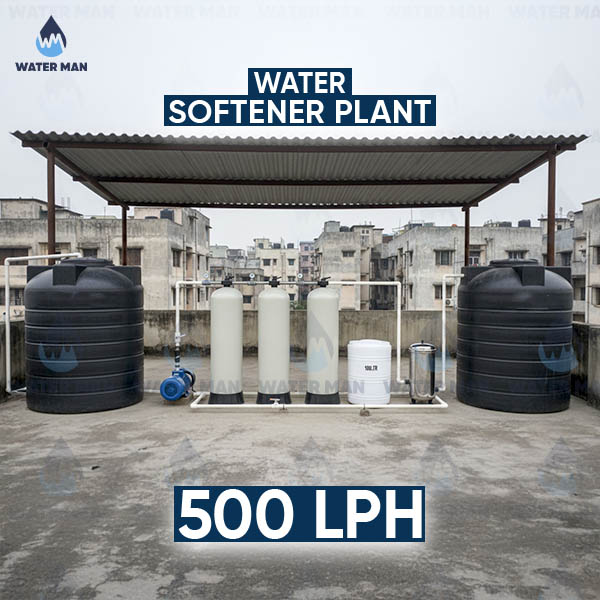
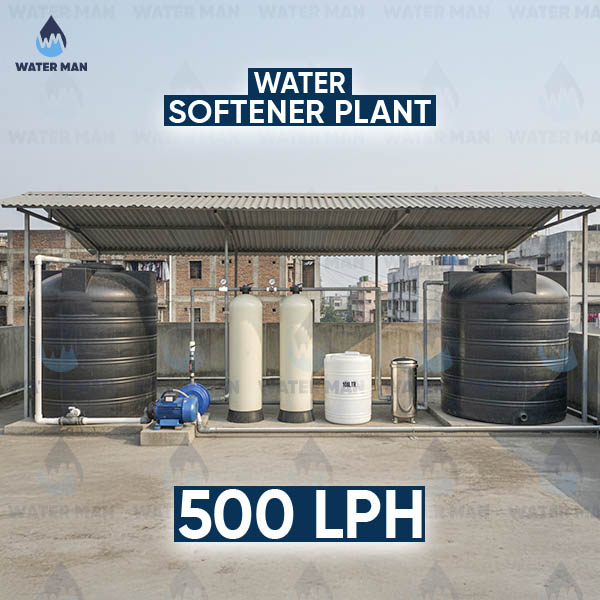
Premium Water Softener Plant 500 LPH | Compact Industrial-Grade Softening
The Water Softener Plant – 500 LPH is a compact, industrial-grade ion-exchange system designed for households and light commercial use. Delivering a service flow of 500 Liters Per Hour, this plant effectively removes hardness-causing minerals like Calcium (Ca²⁺) and Magnesium (Mg²⁺) from borewell, tube-well, and municipal water sources. By preventing scale formation, this household water purifier and industrial hybrid ensures your plumbing and appliances remain efficient and protected.
Why This Softener is a Game-Changer for Your Water
Built around a durable 10×35 (1035) Vessel, this system utilizes a precise softening process to safeguard your equipment:
-
Scientific Ion Exchange: Hard water passes through a high-quality resin bed where calcium and magnesium ions are exchanged for sodium ions, producing softened water.
-
Optimized Vessel Design: Features a 1035 Vessel sized for the optimum resin bed depth required for consistent 500 LPH duty.
-
High-Performance Resin: Uses Strong-acid cation exchange resin (sodium form) for superior mineral removal.
-
Flexible Control System: Equipped with a Manual or Programmable Automatic Multiport Valve (Multiport Valve) to manage service and regeneration cycles accurately.
-
Precision Brine System: Includes a specifically sized brine tank for salt-based regeneration, restoring the resin’s exchange capacity.
Investing in a 500 LPH Softener is a smart way to manage your water filter cartridge price in Bangladesh by shielding your appliances from heavy mineral buildup.
Experience the Benefits of Soft Water
-
Scale Prevention: Stops mineral buildup in boilers, geysers, washing machines, and fixtures, significantly prolonging the life of your equipment.
-
Improved Efficiency: Enhances the performance of soaps and detergents in laundry and cleaning, leading to better lathering and lower chemical consumption.
-
Lower Maintenance Costs: Reduces the need for descaling chemicals and decreases the frequency of service calls for scale-damaged appliances.
-
Essential Pre-Treatment: Acts as a vital shield for downstream units, protecting sensitive components from mineral fouling.
-
Versatile Applications: Ideal for large houses, guest houses, salons, and commercial kitchens that require scale-free water for equipment longevity.
Why Choose WaterMan BD?
WaterMan BD is your trusted provider of 100% authentic water treatment technology in Bangladesh. When you choose our 500 LPH Softener, you are investing in technical reliability:
-
Guaranteed Authenticity: We use only certified Vessels and pre-loaded resins to ensure your system meets high performance standards.
-
Expert Engineering Setup: Our water purifier service team provides full commissioning, site-specific regeneration scheduling, and operator training.
-
Integrated Solutions: For high-iron groundwater, this plant can be paired with our Iron Removal Plant for a total water treatment solution.
-
Nationwide Priority Delivery: We offer rapid shipping and dedicated on-site technical assistance through our contact page across Bangladesh.
Reviews
There are no reviews yet.