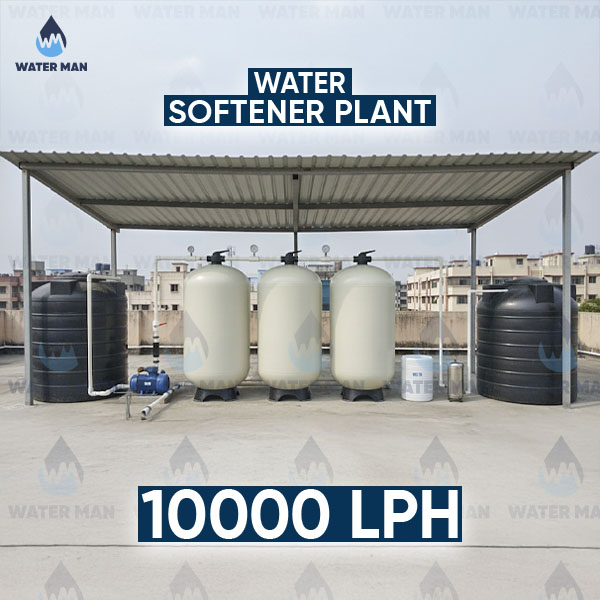
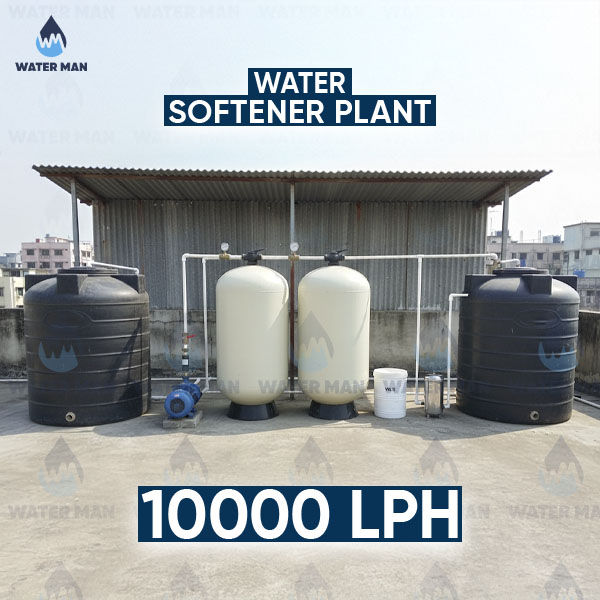
Premium Water Softener Plant 10,000 LPH
The Water Softener Plant 10,000 LPH is a large-scale, centralized ion-exchange softening solution designed for facilities where very high volumes of hard water are consumed and scale control is critical for system reliability. Built around a heavy-duty 36×72 (3672) FRP pressure vessel, this plant is engineered to support large residential complexes, commercial buildings, institutions, and utility systems. This household water purifier and industrial hybrid is designed strictly for utility and equipment protection.
Why This Softener is a Game-Changer for Your Water
This system is engineered to maintain operational efficiency in high-flow systems through a specific technical configuration:
-
High-Capacity Flow Rate: Provides a Rated Capacity of 10,000 Liters Per Hour continuous service flow for massive water demands.
-
Multi-Stage Purification: Features a robust purification stage using Sand, Gravel, Manganese, Carbon, Resin, and a Micron Filter.
-
Durable Vessel Construction: Utilizes a 3672 FRP Pressure Vessel (also available in SS/MS) with an extra-deep resin bed for high throughput.
-
Flexible Operating Modes: Equipped with a Multiport Valve that allows for Manual, Semi-Automated, or Fully Automated operation depending on site requirements.
-
Complete Brine System: Includes a large-capacity brine tank with a salt grid and float assembly for the regeneration cycle.
Investing in this 10,000 LPH plant is the most effective way to manage your water filter cartridge price in Bangladesh by reducing the need for frequent chemical descaling of your primary infrastructure.
Experience the Benefits of Soft Water
-
Infrastructure Protection: Protects extensive pipeline networks, central boilers, heat exchangers, and multiple appliances from severe scale formation.
-
Efficiency Maintenance: Improves the thermal efficiency of hot-water and steam systems while extending the service life of boilers, heaters, pumps, and valves.
-
Cost Reduction: Lowers operational costs and unplanned shutdown risks by reducing descaling frequency and maintenance needs.
-
Versatile Integration: Works as an ideal RO pre-treatment for large-capacity plants and industrial utilities sensitive to scale.
-
Comprehensive Supply Scope: Includes the pressure Vessel, factory-loaded cation exchange resin, interconnecting piping, and isolation valves.
Why Choose WaterMan BD?
WaterMan BD is your trusted provider of 100 percent authentic water treatment technology in Bangladesh. When you choose our 10,000 LPH Softener, you are investing in a system designed for high-volume reliability:
-
Expert Engineering Setup: Our water purifier service team provides commissioning, operator training, and detailed documentation.
-
Technical Guidance: We provide site-specific regeneration schedules and salt consumption guidelines based on your water analysis.
-
Full Support Network: We maintain a complete inventory of water treatment plant accessories and replacement media for all industrial models.
-
Nationwide Priority Delivery: We offer rapid shipping and dedicated on-site technical assistance through our contact page to any location across Bangladesh.
Reviews
There are no reviews yet.