
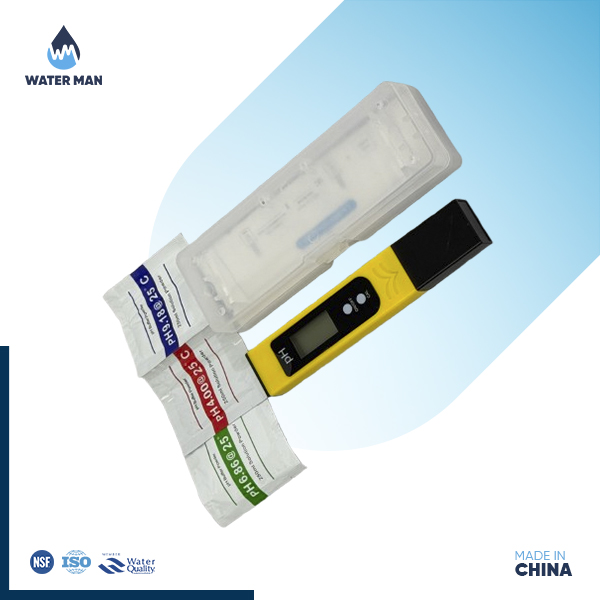
Description of pH Meter
A pH Meter is a digital or analog device used to measure the acidity or alkalinity of a liquid on a pH scale from 0 to 14. It is widely used in water quality testing, laboratories, hydroponics, agriculture, aquariums, food processing, and industrial applications.
- Electrode Type:
- Replaceable or built-in glass probe sensor for durability.
- Some models include multi-parameter sensors for pH, TDS, EC, and temperature.
- Battery Operated: Usually powered by button cells (e.g., LR44) or AAA batteries.
- Waterproof & Portable: Some models feature water-resistant casing for durability.
- Applications:
- Drinking water testing – Ensures safe water consumption.
- RO (Reverse Osmosis) water filtration monitoring – Checks water purity.
- Aquariums & fish tanks – Maintains balanced pH for aquatic life.
- Hydroponics & agriculture – Monitors soil and nutrient solutions.
- Food & beverage industry – Used for pH testing in dairy, brewing, and winemaking.
- Laboratory & research applications – Ensures precision in chemical experiments.
How to Use a pH Meter?
- Calibrate the device using pH buffer solutions (pH 4.0, 7.0, and 10.0).
- Turn on the meter and dip the electrode into the liquid sample.
- Wait for a stable reading and note the pH value.
- Rinse the probe with distilled water after each use for accuracy.
Benefits:
✅ Quick & accurate pH measurement in seconds.
✅ Easy to use & portable for home and professional use.
✅ Ensures water quality & food safety by detecting pH imbalances.
✅ Essential for hydroponics, aquariums, and industrial applications.

Reviews
There are no reviews yet.