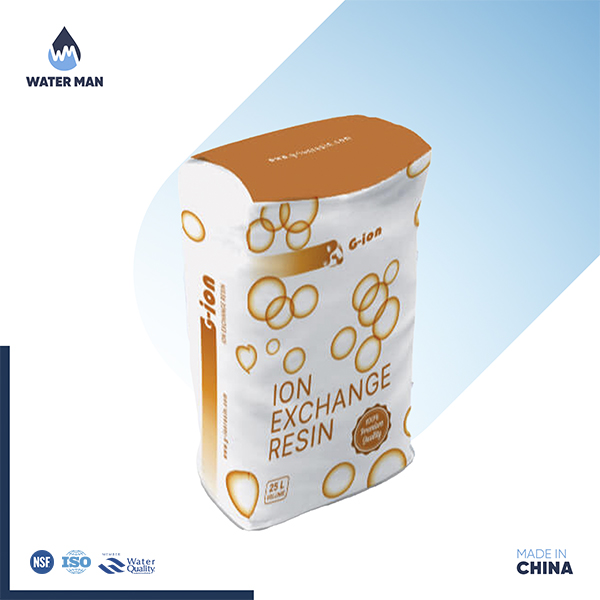

Description of G-ion Cation Resin
Cation Resin in BD is a vital component in water treatment systems, primarily designed for the removal of positively charged lons, known as cations, frorn water. Comprising tiny beads of plastic coated with a functional group containing negatively charged ions, this resin facilitates the exchange of positively charged ions in water for sodium ions present on the resin beads. This process softens the water, making it suitable for various applications. While commonly used in water softeners, Cation Resin in BD finds utility in diverse sectors such as food and beverage processing, pharmaceutical manufacturing, and chemical processing.
Description:
The structure of Cation Resin in BD involves minute plastic beads coated with a functional group containing negatively charged ions. As water flows through a bed of Cation Resin in BD, the positively charged ions in the water are attracted to the negatively charged lons on the resin beads. This attraction leads to the exchange of positively charged lons with sodium ions, resulting in softened water. The resin’s ability to remove not only hardness but also other cations like iron, manganese, and lead makes it versatile for various water treatment applications.
Benefits:
Water Softening: The primary function of Cation Resin in BD is to soften water, making it more suitable for activities like bathing, cleaning, and washing dishes and clothes.
Removal of Contaminants: Cation Resin in BD can effectively remove contaminants such as iron, manganese, and lead, contributing to improved water quality and taste.
Cost-Effective and Low Maintenance: Cation Resin in BD is relatively inexpensive and easy to maintain, offering a cost-effective solution for water treatment systems.
Sustainability: The resin’s regenerable nature allows for multiple uses, making it a sustainable option in water treatment applications
Application Sectors:
Cation Resin in BD finds extensive applications in various sectors, including:
Water Treatment Systems: Mainly used in water softeners and demineralizers.
Food and Beverage Processing: Ensures water quality in the production processes.
Pharmaceutical Manufacturing: Contributes to the purity of water used in pharmaceutical applications.
Chemical Processing: Used in water treatment for various chemical manufacturing processes.

Reviews
There are no reviews yet.